Quiz Entry - updated: 2026.10.15
What is toxic behaviour in gaming, and what are its possible drivers?
An umbrella term for negative activities that abuse other players, break rules or violate social norms. Possible drivers are the players themselves, exposure (normalisation), competition, disinhibition through anonymity, and the game industry's own toxic culture.
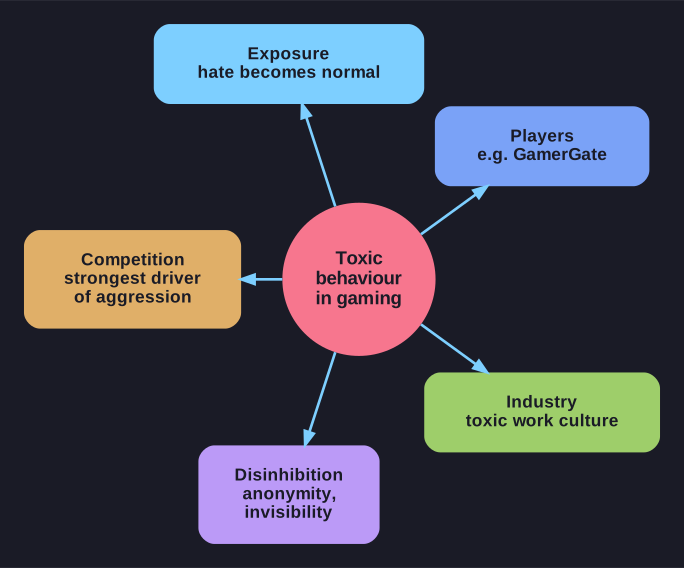
* Players, exposure, competition, disinhibition and the industry *
Growing player numbers come with growing recognition of racism, sexism, xenophobia and other harassment on gaming platforms. It creates toxic communities, hits marginalised groups hardest, and raises ethical and financial questions for the industry (Munn 2023).
| Driver | Mechanism |
|---|---|
| The players | E.g. GamerGate (2014–15), an online campaign against female games journalists, driven by fear of feminisation and of games moving away from a white male base. |
| Exposure | Hate is so common that it becomes normal. Hostile comments set the tone for others and get repeated. |
| Competition | High competitive pressure breeds hostility rather than cooperation. Competition, not violence, is the game feature with the biggest influence on aggression. Insults become a way to shift blame and cope with losing. |
| Disinhibition | Anonymity ("you don't know me") and invisibility ("you can't see me") create distance and let players disown their behaviour and its consequences. |
| The industry | Cases of sexual harassment and toxic work cultures in game companies (2018, 2020). The argument: a toxic industry tends to make toxic products. |
Go deeper:
 Munn (2023): Toxic play, examining the issue of hate within gaming (First Monday) — open-access paper with the drivers and countermeasures.
- Wikipedia: Gamergate (harassment campaign) — what happened in 2014-15 and why it matters.