Quiz Entry - updated: 2026.10.15
What are the four main goals Microsoft pursues as a norm entrepreneur?
- Trust-building: keep worldwide trust in its own technology and in technology as a whole.
- Software protection: protect its products and business model from states using them as a battlefield.
- Balance of responsibility: clarify public vs. private duties in cybersecurity.
- Sociopolitical influence: shape global public policy and extend its legitimacy beyond technical services.
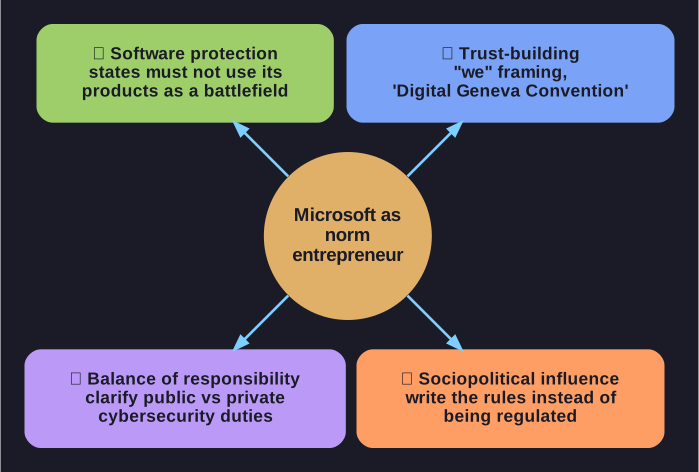
* Four goals behind Microsoft's norm entrepreneurship, all serving its business *
- Trust-building. After an attack, customers ask how safe the product is at all, and that trust drives revenue. The tool is strategic rhetorical framing with "we" ("We are more at risk than ever", "We must come together", "We are digital citizens"). Calling the proposal a "Geneva Convention" puts Microsoft on a level with the International Committee of the Red Cross and gives it a moral sheen by association.
- Software protection. When states attack each other, Microsoft's customers are often fighting each other on its products, and the cost of re-engineering for protection has risen. Microsoft argues that some security measures lie outside national governments' control. It uses linking: embedding norms in bigger narratives ("protecting national security", "continued prosperity of the modern economy") makes them more persuasive.
- Balance of responsibility. Microsoft wants norms that settle which cybersecurity duties are public and which private. It offers expertise and innovation in exchange for states' normative support, and presents company participation as indispensable. The ongoing debate on vendor liability for software vulnerabilities pushes it to promote clear, globally standardised state norms. The demand for "technological neutrality" works as a shield, so that all states accept it as a neutral provider.
- Sociopolitical influence. Behind it is the idea that whoever writes the rules does not have to be regulated by others. Some of this can serve the public good, but corporate actors are not inherently aligned with citizens' interests.
Go deeper:
 Fairbank (2019): The state of Microsoft? The role of corporations in international norm creation — the paper that identifies the four goals.