Quiz Entry - updated: 2026.10.15
From an ethical perspective, how can games affect a person's duties and their chances of a good life?
Games can teach skills and create friendships, but they can also lead people to neglect duties such as health. Their faster rewards can pull players out of reality until they value virtual success as highly as real success or more, and an addicted player loses autonomy.
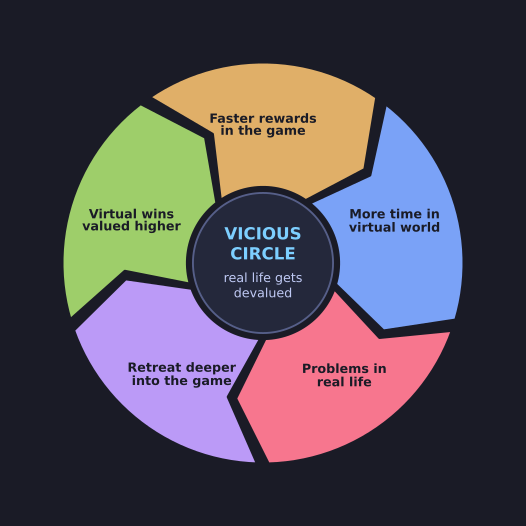
* Faster rewards pull players in, real-life problems push them further in *
Duties (Klemm & Pieters 2017):
- Positive: players can learn new skills and make friends.
- Negative: health may be neglected; skills from the virtual world may not transfer to the real one; the difference between real and simulated values may become unrecognisable.
- The transfer claim is disputed. Strategic thinking, problem-solving, communication under stress and English skills often do carry over into IT work. It depends on the game and the context.
The good life (happiness and a long life):
- Games may offer faster rewards than real life, so players spend more time in the virtual world.
- The resulting problems (e.g. at school) push them further into the game.
- They start to rate virtual success equal to or above real success, which devalues real life further. It is a vicious circle.
- Addicted players suffer from a loss of autonomy: they no longer control their gaming habits and find it hard to stop even when they see the harm.
Go deeper:
 Klemm & Pieters (2017): Game mechanics and technological mediation — open-access paper behind the duties and good-life analysis.
- Wikipedia: Video game addiction — the clinical debate around gaming disorder.