Why does the correspondent-banking system for international payments motivate people to try distributed ledgers?
Because a single cross-currency payment threads through several banks — Nostro/mirror accounts and correspondent banks — making it slow, costly through many intermediate hops, and dependent on chains of inter-bank trust.
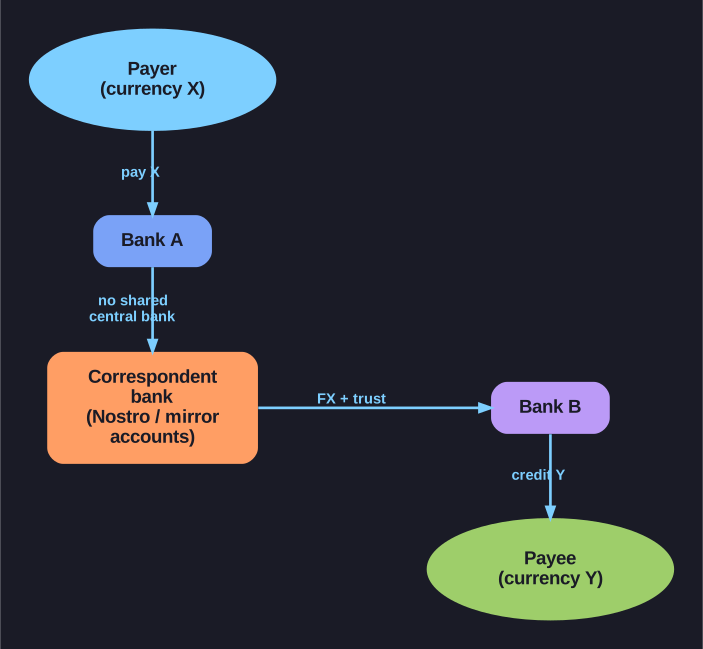
* With no shared central bank across currencies, Bank A routes through a correspondent bank it must trust to hold accounts and do the FX; each hop adds delay, fees, and a trust relationship. *
In the legacy system, moving money between banks isn't instant settlement — it's bookkeeping across accounts. Same-currency transfers already involve the two banks plus a central bank (via mirror accounts, the bank's local copy of its central-bank account, and Nostro accounts, an account one bank holds at another). Cross-currency is worse: there's no single central bank to settle, so Bank A uses a correspondent bank in the target country, requiring a trust relationship with it; currencies without a correspondent need extra hops. The result — long confirmation times, fees at every hop, and pervasive inter-bank trust — is exactly what distributed-ledger proposals aim to cut.
Go deeper:
 Nostro and vostro accounts (Wikipedia) — the correspondent-account bookkeeping ("one bank keeps money at another") that makes cross-border payments a chain of trust.