Why does Budelacci argue that critical thinking matters more in the digital age, not less?
Because the on-screen world is more emotional, angrier and more chaotic, and emotional/irrational ways of thinking are rising — which he sees as a real threat to culture and democracy.
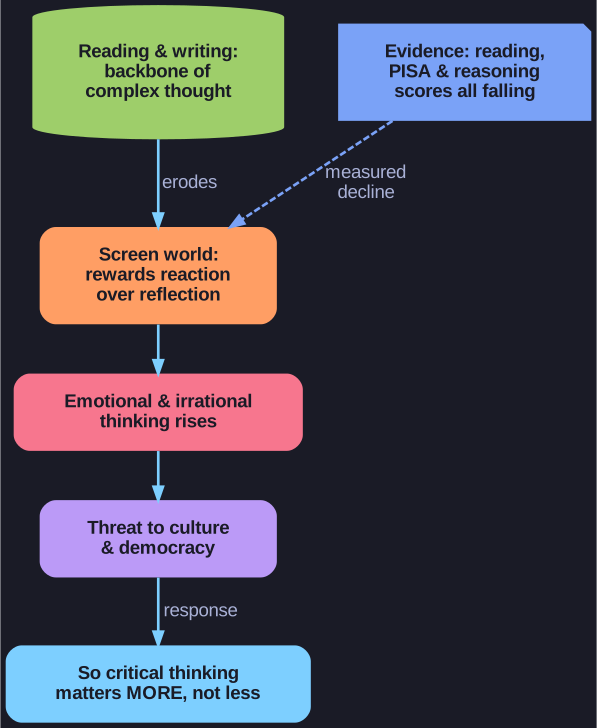
* Budelacci's argument in one chain: reading and writing underpin complex thought, the screen world erodes it (measured in falling reading, PISA and reasoning scores), emotional-irrational thinking rises, and that threatens culture and democracy — so critical thinking matters more, not less. *
The argument runs: reading, writing and thinking are the core competencies of intellectual development, and the entire intellectual infrastructure of modern civilisation rests on the complex modes of thought that reading and writing make possible. The screen world pushes against this. It rewards reaction over reflection: discourse "sinks into panic and hate," and anti-scientific, non-critical thinking flourishes even at the highest levels of government. The rise of these emotional and irrational styles of thought is, in this view, a major challenge to culture and to democracy — which is why deliberately cultivating critical thinking becomes urgent rather than optional.
Go deeper:
 Wikipedia — Programme for International Student Assessment (PISA) — the international reading, maths and science scores whose recent decline is cited as evidence.