What is the sunk-cost fallacy?
Continuing to invest in something because of what you've already spent, rather than because of what it will return going forward.
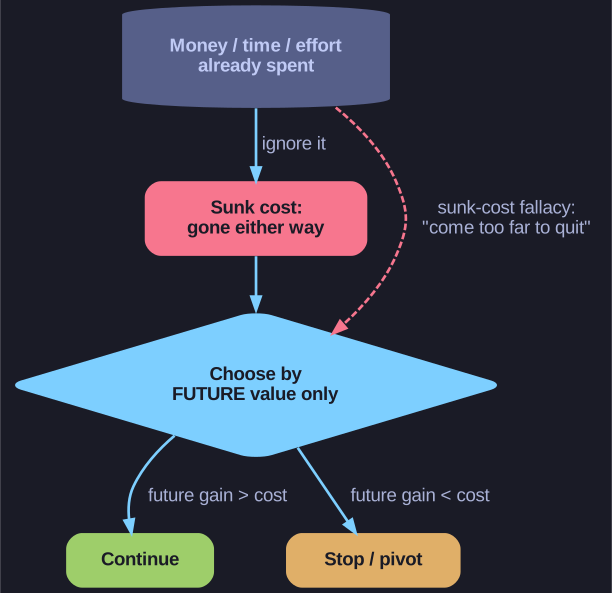
* Rational route: treat spent resources as gone and decide on future value; the fallacy is the dashed arrow, letting past spending drive the choice. *
Past costs — money, time, effort — are sunk: they are gone no matter what you choose next, so rationally they shouldn't sway a forward-looking decision. The fallacy is letting them sway it anyway: "we've already poured so much in, we can't stop now." Budelacci's example is Kodak, which had invested so heavily in its film business that it failed to pivot to the digital photography it had itself helped pioneer, and was overtaken. The lesson: decide by expected future value, not by a desire to redeem money already spent.
Go deeper:
 Wikipedia — Sunk cost — the fallacy vs the "bygones" principle, with the Concorde and nuclear-plant cases.