What is the pessimism bias?
Overestimating the likelihood of bad outcomes — the mirror image of optimism bias.
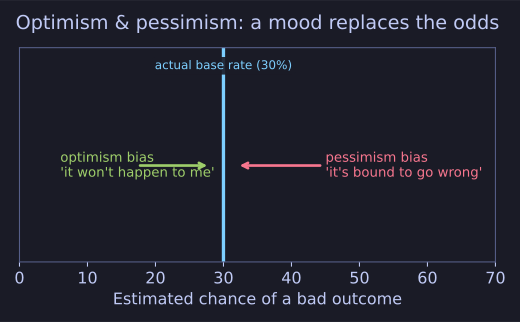
* Both biases push the estimate off the true base rate — optimism below it, pessimism above it ('it's bound to go wrong'). *
The mechanism is often a current emotional state colouring expectations: feeling low or anxious (and in conditions like depression) makes negative futures feel both more probable and more vivid, so the world's downside looms larger than the evidence supports. It can also be self-protective — bracing for the worst so reality can only pleasantly surprise.
Example: Before a job interview someone convinced "I'll definitely freeze and embarrass myself" may avoid applying at all, treating a feared outcome as a foregone one — and so missing chances that, statistically, were far from hopeless.
Tip: Optimism and pessimism bias bracket the truth from opposite sides; both replace the actual odds with a mood. Ask for the base rate, not the feeling.
Go deeper:
 Wikipedia — Optimism bias (both valences) — the encompassing article on unrealistically valenced forecasting.
- Wikipedia — Depressive realism — the intriguing flip side: mild low mood can sharpen judgement accuracy.