Quiz Entry - updated: 2026.07.30
What is the Multiple Authorization pattern, and what does "M-of-N" mean?
Pre-define a set of N blockchain addresses that may authorise an action, and require any M of them to sign — so no single key is a single point of failure, and losing one key need not lose control.
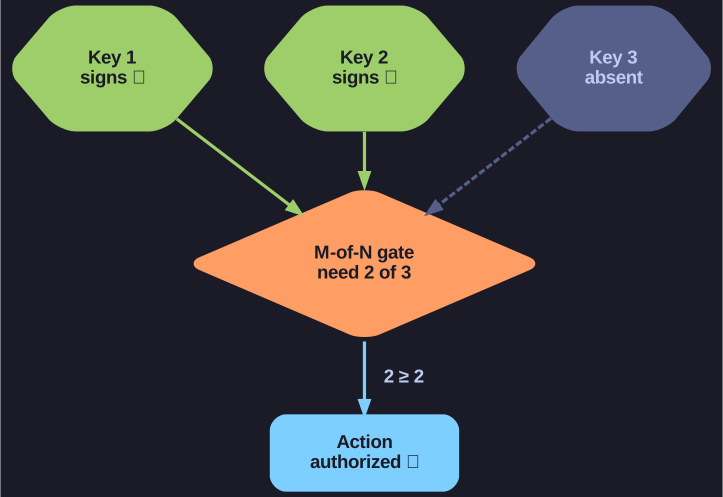
* M-of-N multisig: any 2 of 3 keys suffice, so one lost or unavailable key does not block authorisation. *
- Problem. An activity (say, a payment) may need authorisation from multiple addresses, but the exact signers can't always be fixed because an authority might be unavailable — and a blockchain offers no recovery for a lost or compromised private key.
- Solution. Use a multi-signature mechanism: on Bitcoin this is native; on Ethereum a smart contract mimics it. An M-of-N scheme means M out of N designated private keys must sign to authorise, where M is the threshold. This binds authority flexibly to a group rather than one key.
- Benefits. Flexibility (authorisation drawn from a pre-defined set) and lost-key tolerance (one participant can hold several of the N addresses, and a function can update the list and threshold).
- Drawbacks. Pre-defined authorities (all N possible signers must be known in advance); lost key (the N keys still must be safeguarded); cost of dynamism (on a public chain, updating the list and storing multiple addresses costs more than storing one).
Go deeper:
 Multisignature wallet (Wikipedia) — how requiring a threshold of independent signatures raises security and removes the single-key point of failure.