What is the middle ground fallacy (golden mean / appeal to moderation)?
Assuming the compromise position between two extremes must be correct simply because it's in the middle.
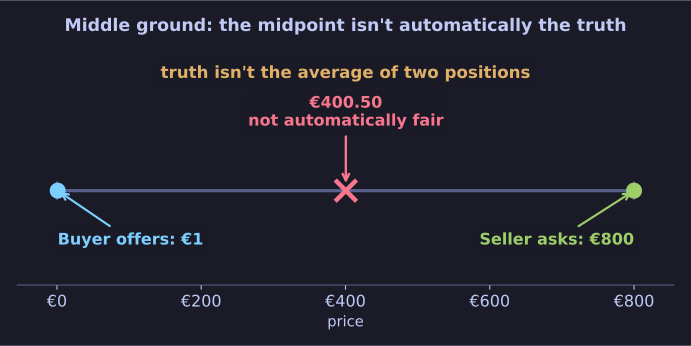
* The midpoint between €1 and €800 is €400.50, but that isn't automatically the fair price — truth isn't the average of two positions. *
The pattern: A and B are extremes, C is between them, therefore C is right. It fails because splitting the difference isn't a route to truth — sometimes one extreme is simply correct, or the right answer is outside the range entirely.
One person says a vaccine is safe; another insists it's a deadly conspiracy. "The reasonable view must be somewhere in between — it's probably a bit dangerous."
Truth isn't decided by averaging opinions. If a seller's computer is worth €800 and someone offers €1, "€400.50 must be the fair price" doesn't follow. Moderation is often genuinely right — but because the extremes are "too much" and "too little," not merely because it's the midpoint, and that has to be argued.
Tip: Compromise is a fine way to settle a negotiation; it's not a way to settle a question of fact.
Go deeper:
 yourlogicalfallacyis.com — Middle ground — the "truth is in the middle" assumption, in one page.
 Wikipedia — Argument to moderation — the golden-mean fallacy and when a compromise really is unjustified.