What is the difference between correlation and causation, and why is confusing them a classic thinking error?
Correlation is a statistical pattern (two things move together); causation is a cause-and-effect link — and you cannot reliably infer the second from the first.
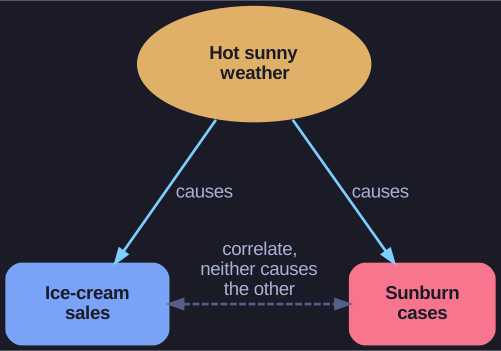
* A hidden common cause (hot weather) drives both — so ice-cream sales and sunburns correlate without either causing the other. *
Two variables can rise and fall together for reasons that have nothing to do with one causing the other:
- Correlation — a statistical association: when A is high, B tends to be high.
- Causation — A actually produces B.
The classic illustration: ice-cream sales and sunburns climb together, but neither causes the other — a third factor, hot sunny weather, drives both. Treating a mere correlation as proof of cause is one of the most common reasoning errors, and it powers a lot of bad health, political and economic claims. The discipline is to ask: could a hidden common cause, or pure coincidence, explain this pattern instead?
To upgrade a correlation to a genuine causal claim, three further conditions should hold beyond the statistical link:
- Temporal order — the cause must come before the effect in time.
- Experiment — ideally you can manipulate the suspected cause and watch the effect change (a controlled trial), not just observe them together.
- Theory — a plausible mechanism explaining why one would produce the other.
If you only have the significant correlation and none of these hold, you are entitled to speak of an association — nothing more.
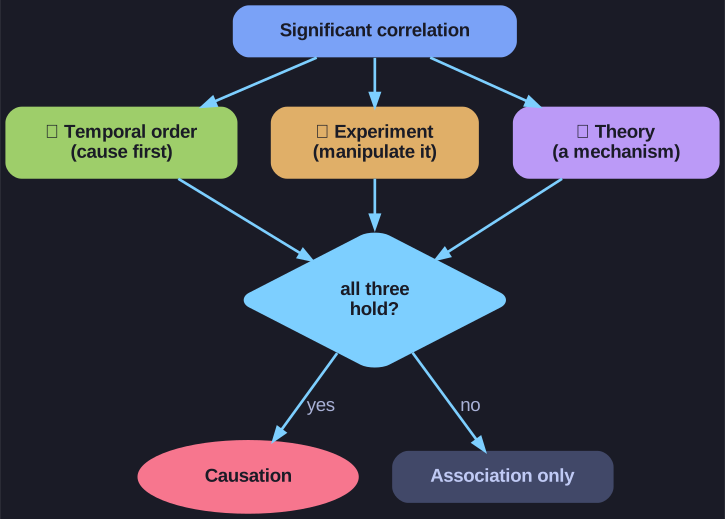
* Upgrading a correlation to a causal claim: it must also pass temporal order, experiment and theory — otherwise it stays a mere association. *
Go deeper:
 Wikipedia — Correlation does not imply causation — the fallacy, with its reverse-causation and coincidence variants.
- Wikipedia — Confounding — the hidden common cause that manufactures a spurious correlation.