What is the belief bias?
We judge whether an argument is sound by whether we agree with its conclusion, rather than by whether the reasoning actually holds.
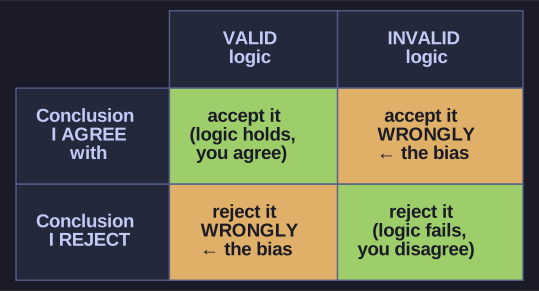
* Belief bias waves through agreeable-but-invalid arguments and rejects disagreeable-but-valid ones — believability substituted for validity. *
The mechanism is that evaluating logic is effortful, so the brain takes a shortcut: if the conclusion feels true, the argument seems valid; if the conclusion feels false, the argument seems flawed — regardless of the real logical structure. Believability gets substituted for validity.
Example: "All living things need water; roses need water; therefore roses are living things." The conclusion is true, so it feels like a valid argument — but the logic is actually broken (it's the same form as "all cats have legs; dogs have legs; therefore dogs are cats"). We wave it through because we like where it lands.
Tip: To test an argument, temporarily ignore whether you agree with the conclusion and check only whether the conclusion must follow from the premises.
Go deeper:
 Wikipedia — Belief bias — the syllogism experiments that isolate it.