What is the "autonomy becomes obedience" paradox in trying to teach someone to think for themselves?
Steering someone from the outside toward self-direction is self-undermining: if they only reach "independence" by following your programme, what you've actually produced is obedience, not autonomy.
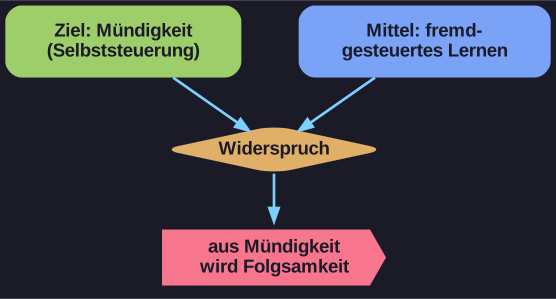
* The goal (Mündigkeit) and the means (external steering) pull against each other, so out of maturity comes compliance. *
Education aimed at freedom (Erziehung zur Freiheit) wants to turn Mündigkeit — maturity, the capacity to think and decide for oneself — into the outcome. But the method is fremdgesteuertes Lernen: externally-steered, instructor-designed learning. The contradiction:
- The goal is self-steering (the learner directs their own thinking).
- The means is other-steering (someone else designs, prompts and grades the path).
- If the learner becomes "independent" only by completing the externally-set programme, their independence was handed to them — aus Mündigkeit wird Folgsamkeit (maturity collapses into compliance).
It doesn't make teaching critical thinking impossible, but it sets a hard limit: an instructor can create conditions, model the moves, and step back — but can't deliver autonomy without contradicting it. The last step has to be taken by the learner, unprompted, or it isn't autonomy.
Go deeper:
 Kant — "What Is Enlightenment?" — the source of Mündigkeit: emerging from self-imposed immaturity (Unmündigkeit) under the motto "dare to think for yourself."