What is the appeal to ridicule (appeal to mockery), and how does it differ from a legitimate reductio ad absurdum?
Substituting mockery for evidence — treating a claim as refuted simply because it's been made to look laughable.
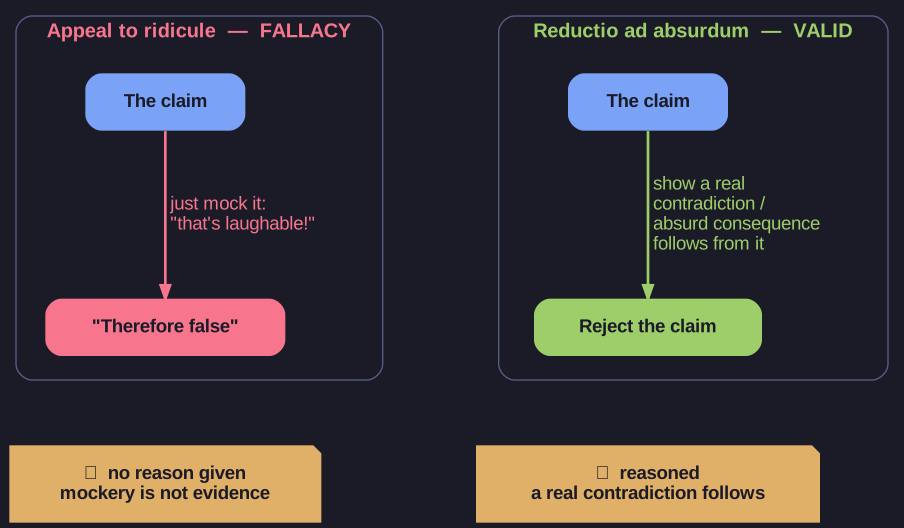
* Mocking a claim isn't evidence it's false (appeal to ridicule); deriving a real contradiction from it is valid (reductio ad absurdum). *
The pattern: a claim is presented as ridiculous ("that's the most laughable thing I've ever heard"), and its being mocked is taken to show it's false. It fails because making something sound absurd is not the same as showing it's absurd — "1+1=2? What a ridiculous thing to say!" mocks a true claim without touching its truth.
"Sure, my opponent says we should lower tuition — but that's just laughable."
The sneer does the work no argument does. Crucially, this is not the same as a reductio ad absurdum, which is legitimate: a reductio argues that a genuine contradiction or plainly false consequence follows from a claim, so the claim must be rejected. The difference is whether an actual chain of reasoning shows the absurdity (valid) or the speaker merely asserts it with a laugh (fallacy).
Tip: Ridicule aimed at the claim is appeal to ridicule; ridicule aimed at the person shades into ad hominem. Either way, a laugh is not a refutation.
Go deeper:
 Wikipedia — Appeal to ridicule — substituting mockery for evidence.
- Wikipedia — Reductio ad absurdum — the legitimate cousin: deriving a real contradiction to reject a claim.