What is an empathy map, and what is it for?
A collaborative visualisation that gathers what a team knows about a type of user — what they say, think, do and feel — to build shared understanding and support decisions.
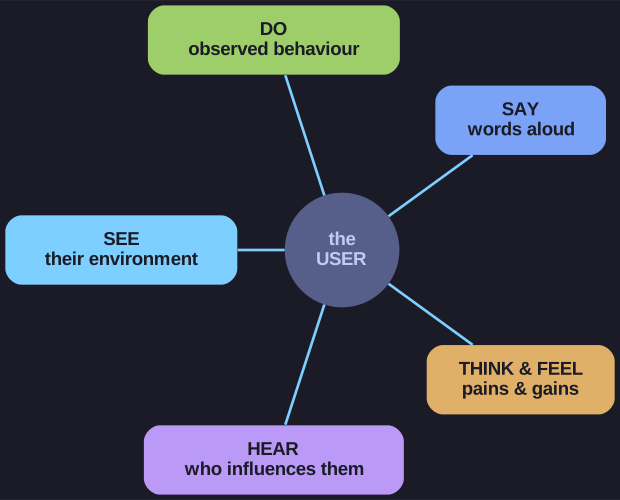
* Around a picture of the user, the team pools what they say, do, see, hear, and think & feel (pains and gains). *
An empathy map externalises a team's scattered knowledge about a particular kind of user onto one shared canvas, so the understanding isn't trapped in individual heads. It serves two purposes:
- Create a shared understanding of user needs across the team.
- Aid decision-making, by keeping the real user in view when choices are made.
The canvas typically captures, around a depiction of the user: what they say and do (observable), what they see and hear (the environment and the people influencing them), and what they think and feel (inferred) — the last split into pains (fears, frustrations, anxieties) and gains (wants, needs, hopes). The value is in the act of filling it in together — disagreements surface, gaps in knowledge become visible, and the team converges on one picture of who they're solving for.
Go deeper:
 Nielsen Norman Group — Empathy Mapping — the canonical guide: the quadrants, why it works, and how to run one.
 Gamestorming — the Empathy Map Canvas — Dave Gray's printable canvas (say/do/see/hear/think & feel, pains & gains) to fill in as a team.