What is a Man-in-the-Middle (MITM) / Man-in-the-Browser (MITB) attack?
An attacker secretly inserts themselves between two parties to read or manipulate the traffic — MITB does it from inside the victim's browser.
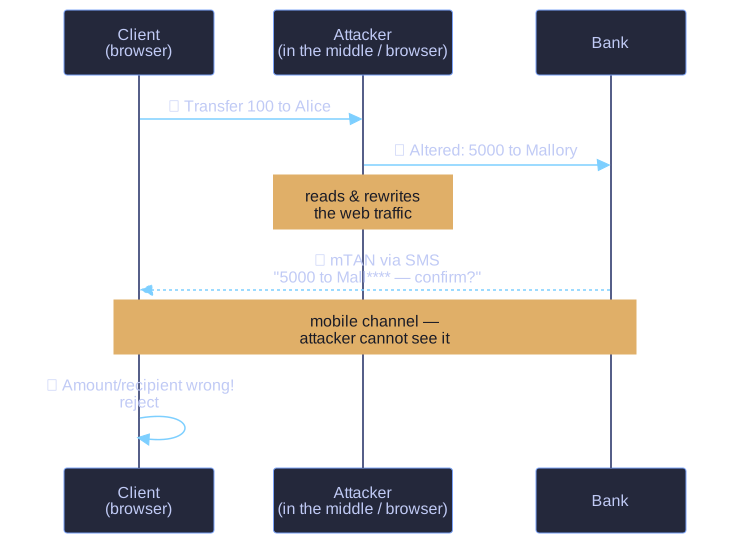
* MITM/MITB rewrites the transaction in transit — the out-of-band mTAN (amount + partial recipient by SMS) exposes it on a channel the attacker does not control. *
In a Man-in-the-Middle attack, malicious code slips unnoticed between your computer and, say, your bank, taking control of the data flow — including the ability to manipulate transactions (not just eavesdrop). Man-in-the-Browser is a variant operating inside the browser itself, altering what you see and send.
A classic defence — out-of-band confirmation: the mTAN approach splits the transaction across two channels (internet + mobile network) and sends a confirmation (amount, partial recipient account number) to your phone. Since the attacker controls only the browser channel, you can catch a manipulated payment before it's sent.
Tip: MITM breaks both confidentiality (they read it) and integrity (they can change it). TLS with proper certificate validation is the front-line defence on the web.
Go deeper:
 Man-in-the-browser (Wikipedia) — the browser-resident trojan variant and the out-of-band verification defence.
- Man-in-the-middle attack (Wikipedia) — the general interception / active-eavesdropping model and its defences.
- MITM attack (Imperva) — ARP/DNS/IP spoofing techniques and the TLS/HSTS mitigations.