What does the typical white-collar offender look like, and why does that profile matter for how organisations defend themselves?
Not an outsider with a criminal record: the typical economic offender is a well-educated, well-established, unremarkable senior insider — which is why controls built to catch "suspicious types" fail.
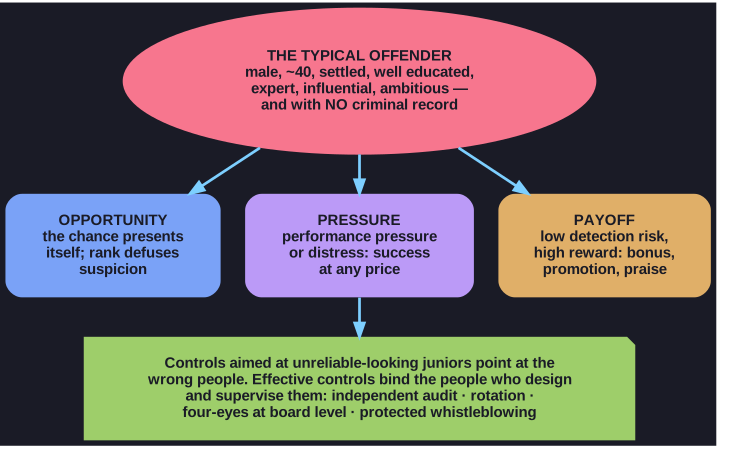
* The profile is unremarkable, which is precisely why controls built to spot »suspicious types« miss *
The composite profile from criminological research on economic crime:
| Dimension | Finding |
|---|---|
| Demographics | Male, around 40, married or otherwise "living in settled circumstances" |
| Education | Good to very good; strong professional expertise |
| Standing | Influential inside the firm, ambitious, above-average professional commitment |
| Record | Usually no previous convictions |
| Behaviour | No generalisable behavioural or social conspicuousness |
The drivers divide into disposition and situation:
- Self-image and status. A degree of vanity — heavily fed in the upper floors of large companies — plus the conviction "I make the rules here".
- Opportunity. Very often it is simply that the chance presents itself to improve one's position or pay.
- Pressure. High performance pressure or genuine distress: when the order book and therefore, under performance-linked pay, personal income collapse, the pressure builds until success must be secured at any price.
- Favourable maths. Low probability of detection combined with a high payoff — promotion, salary increase, bonuses, praise for revenue growth.
- Protection by rank. Because offenders are senior, they are often able to dispel suspicion or skilfully circumvent the control bodies that exist to catch them.
The practical consequence is uncomfortable: a control system aimed at unreliable-looking juniors is aimed at the wrong people. Effective controls have to bind the people who design and supervise the controls — which is the structural argument for independent audit, mandatory rotation, four-eyes principles at board level and protected whistleblowing channels.
Go deeper:
 Wikipedia: White-collar crime — the category, its typical offences and why detection rates are so low.
- Wikipedia: Wirtschaftskriminalität — the German-language treatment, closer to the offender-profile research this card draws on.