What does a "block" contain?
A block bundles together some data (typically a batch of transactions), a block number, a nonce, and the hash of the previous block — and the whole bundle is run through a hash function to produce this block's own hash.
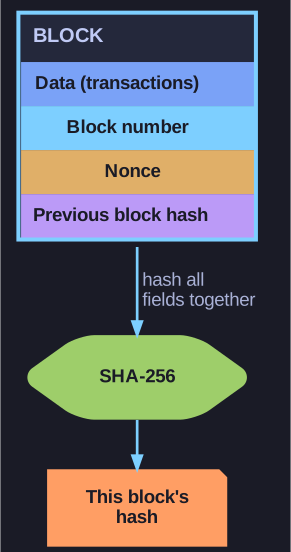
* A block's fields (data, number, nonce, previous hash) are hashed together into this block's own fingerprint. *
Think of a block as a page in a ledger. Its key fields are:
- Data — the payload, usually the transactions included in this block.
- Block number — its position in the sequence.
- Nonce — a number miners adjust to solve the mining puzzle (explained separately).
- Previous hash — the hash of the block that came before it.
All of these fields are hashed together to produce the block's own hash. Because the previous block's hash is one of the inputs, each block's fingerprint depends on the entire history before it. That single design choice — including the prior hash inside the current hash — is what turns a pile of blocks into a tamper-evident chain.
Go deeper:
 Blockchain — Wikipedia — the "Blocks" section on how each block's header binds its data and the previous hash.