Quiz Entry - updated: 2026.09.18
What are the four classic objections to a consequentialist / utilitarian calculation?
Pseudo-objectivity, incommensurability of pleasures and sufferings, the justice problem, and moral arbitrariness.
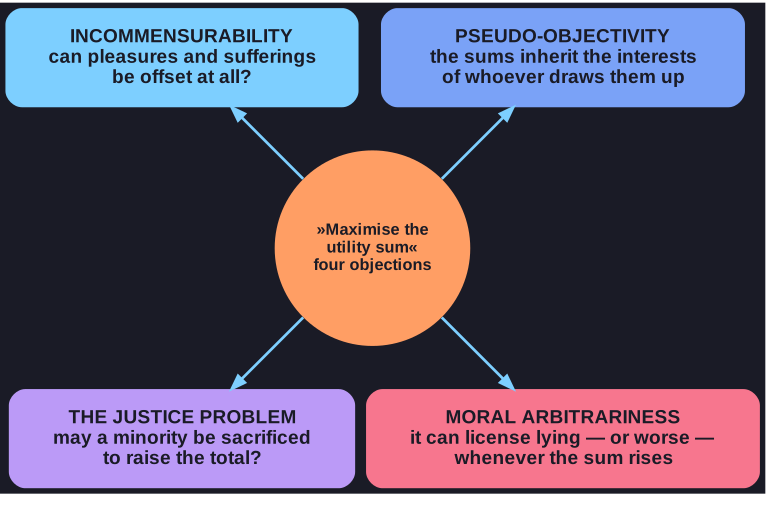
* The last two are the ones with teeth: both say a big enough aggregate gain could buy anything *
- The problem of pseudo-objectivity (Scheinobjektivität). Quantifying benefit or harm looks like arithmetic, but the numbers depend on the perspective and interests of whoever performs the "balance sheet". The calculation inherits the bias of the accountant while wearing the authority of a computation.
- The problem of quantification and comparability of sufferings and pleasures. Can different pleasures and sufferings really be offset against one another? The suffering of animals against human enjoyment of cosmetics? The pleasure of rising profits against the labour-suffering of forced labourers or children? The theory requires a common unit that may not exist.
- The justice problem. If the standard is "the greatest happiness of the greatest number", is it legitimate to maximise the happiness balance at the expense of minorities? This is about the distribution of the benefit, not only its size: is the harm to a working child justifiable if all other actors gain from it? Is it just if nobody is made worse off, but only the rich profit from a productivity gain?
- The problem of moral arbitrariness (sittliche Beliebigkeit). Applying the utility principle can end up endorsing and legitimising actions that are morally dubious — lying, for instance, whenever it raises the sum of utility across those affected. (Sittlich here asks after the moral worth of the action itself, not merely its conformity with a social norm.)
Objections 3 and 4 are the ones with teeth, and they are related: both say that a sufficiently large aggregate gain can, on this theory, buy anything at all. That is exactly the gap deontological constraints are introduced to close — which is why the two theories are best learned as answers to each other rather than as separate lists.
Go deeper:
 Internet Encyclopedia: Act and Rule Utilitarianism — how rule utilitarianism was invented to answer objections 3 and 4 — and whether it succeeds.
- Wikipedia: Utilitarianism — the criticism section collects these objections with their canonical counter-examples.