Quiz Entry - updated: 2026.07.30
Walk through the decision procedure for choosing between no blockchain, a permissionless, or a permissioned blockchain.
Follow the writers: no state or one writer → no blockchain; mutually distrusting writers with no online TTP → blockchain, permissionless if the writer set is open, permissioned if it's fixed and known.
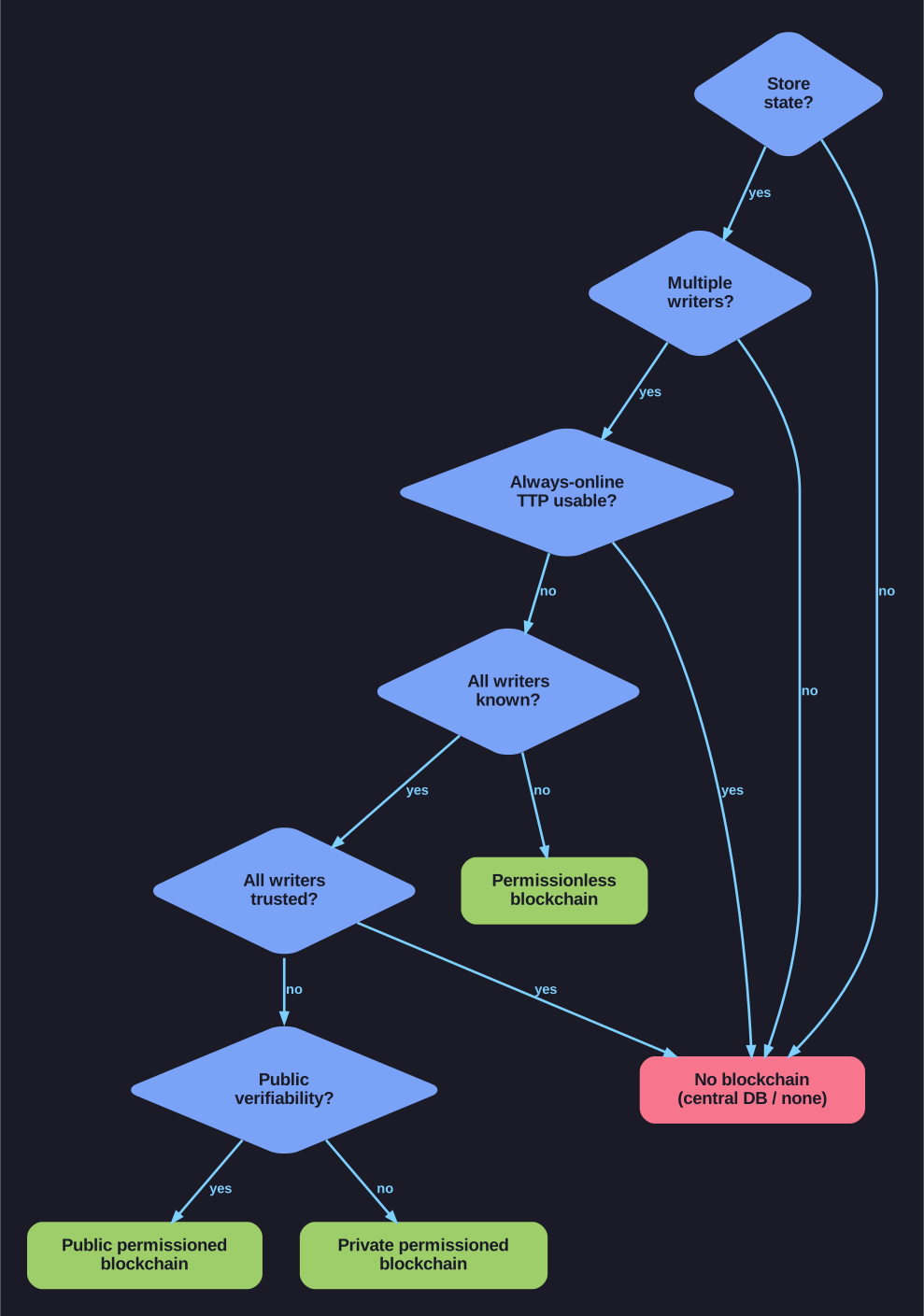
* The Wüst-Gervais decision tree: each blue diamond is one trust question; the green leaves are the three blockchain types, the red leaf is "no blockchain needed". *
Step by step:
- Need to store state? No → no database at all.
- Multiple writers? No → a regular database (one writer, nothing to distrust).
- Is an always-online TTP usable? Yes → delegate writes to it; it verifies transitions — no blockchain.
- Are all writers known? No → permissionless blockchain (open writer set, as in Bitcoin). An offline TTP can act as a certificate authority to make the writer set known, pushing you toward permissioned.
- Are all writers trusted? Yes → a shared-write database suffices — no blockchain.
- Is public verifiability required? Yes → public permissioned; No → private permissioned.
Table 1's throughput/latency trade-offs should feed into the decision too — the flowchart tells you which type is viable, not that it will be fast enough.
Go deeper:
 Wüst & Gervais, "Do you need a Blockchain?" (IACR ePrint 2017/375) — the paper whose Figure 1 is this exact decision tree.
- Blockchain (Wikipedia) — permissionless vs permissioned models the leaves point to.