Quiz Entry - updated: 2026.07.30
Walk through how Alice sends Bob an encrypted message with asymmetric crypto. Which keys appear in c = E(m, pk_Bob) and m = D(c, sk_Bob)?
Alice encrypts the message with Bob's public key; Bob decrypts the ciphertext with his own private key.
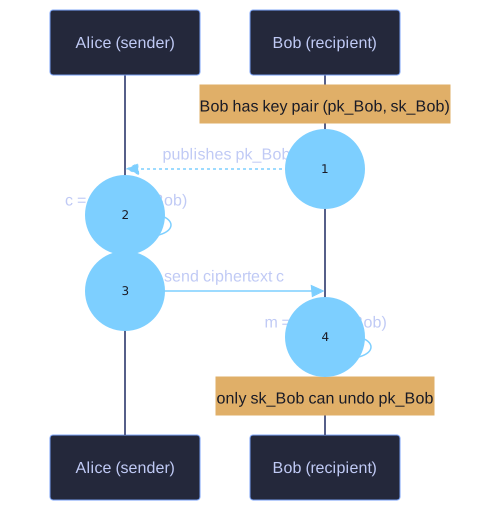
* Confidentiality flows to the recipient's keys: encrypt with pk_Bob, decrypt with sk_Bob. *
c = E(m, pk_Bob)— Alice takes plaintext m and encrypts it with Bob's public key → ciphertext c.- Alice sends c to Bob over the network.
m = D(c, sk_Bob)— Bob decrypts c with his own private key (sk_Bob) → recovers m.
Only Bob's private key can reverse something locked with Bob's public key, so even if an eavesdropper grabs c, they can't read it.
Tip: E = Encrypt, D = Decrypt, pk = public key, sk = secret/private key. The subscript always points to Bob, because the message is for Bob — confidentiality is the recipient's keys.
Go deeper:
 Public-key cryptography — Encryption (Wikipedia) — the same encrypt-to-recipient's-public-key exchange, with worked examples.