Using honesty as the example, how does one value produce several different norms?
Honesty is the value — the abstract idea that telling the truth is good; "you shall not lie" is the social norm derived from it, and the laws against perjury and fraud are the legal norms that protect the same value.
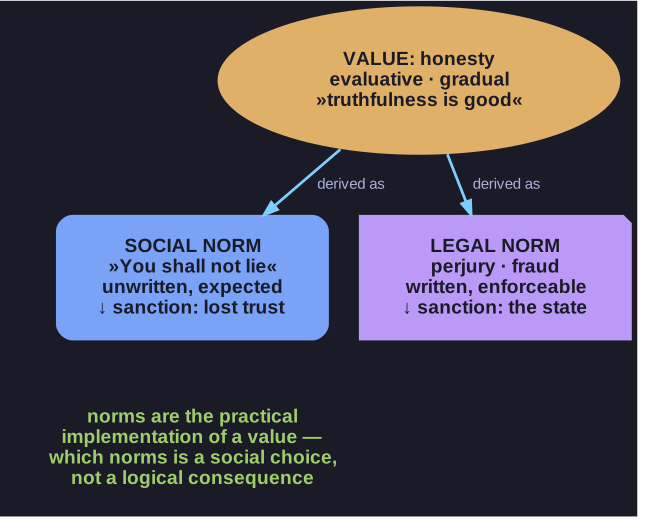
* One value, two norms, two sanctions — and the choice of norms is social, not logical *
The chain runs value → norm → sanction, and the same value can spawn norms at different levels of bindingness:
- Value: honesty (Ehrlichkeit). Truthfulness is held to be desirable and right. Nothing here tells you what to do — it describes what we find worth striving for.
- Social norm: "You shall not lie." An unwritten rule in most social contexts. We expect people to tell the truth, and the sanction for breaking it is social — disapproval, lost trust, exclusion.
- Legal norm: the criminal law. The same value, hardened into enforceable rules. Perjury (deliberately false testimony in court) and fraud are offences; breaking those norms gets you punished by the state, not merely frowned at.
Two things are worth taking from this. First, a single value can be operationalised in many ways, and the norms chosen are a social decision, not a logical consequence — different societies draw the perjury line differently while sharing the value. Second, this is why arguments about norms so often go nowhere: two people can agree completely on the value and still disagree about which rule implements it.
Go deeper:
 Wikipedia: Social norm — how unwritten expectations are enforced, and what happens when they collide with legal ones.