Stakeholders can be selected by influence or by entitlement. What is the difference, and which moral theory does each reflect?
The prevailing approach picks stakeholders by how much they can help or hurt the firm (power-strategic, stakeholder as object); the normative-critical approach holds that all stakeholders deserve equal consideration because they have rights, not leverage (duty ethics).
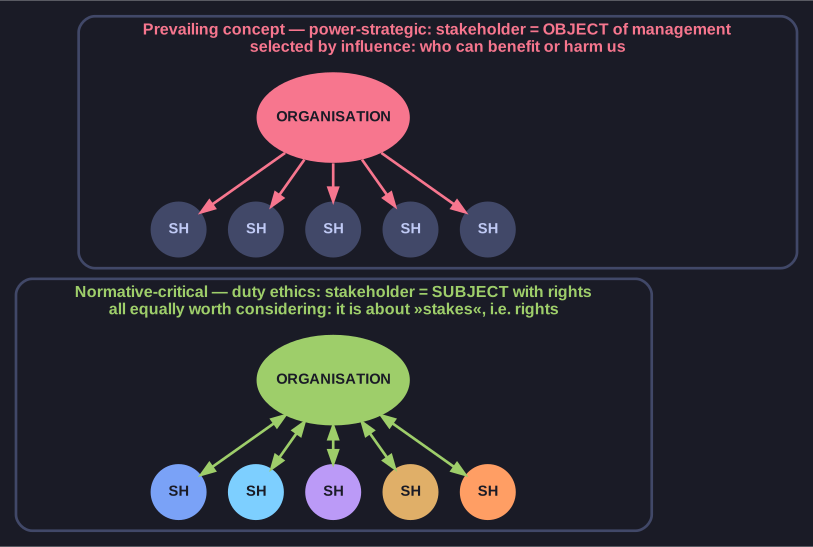
* Power-strategic (one-way arrows, selection by influence) versus normative-critical (two-way, selection by entitlement) *
| Prevailing concept | Normative-critical approach | |
|---|---|---|
| Basis of selection | Influence — who can benefit or damage the firm | Entitlement — who has a legitimate claim |
| The stakeholder is | An object of management | A subject with rights |
| Question asked | "What use is this group to us?" | "What is this group owed?" |
| Underlying ethics | Instrumental / consequentialist | Duty ethics (Pflichtenethik) — rights, "stakes" |
| Typical picture | Arrows point outward from the firm to each group | Arrows point both ways between firm and groups |
The distinction is not academic — it changes who appears on the map. Under the power-strategic reading, a group with no leverage (a community with no legal standing, an unorganised set of users, people downstream of a plant) is simply not a stakeholder worth managing, however much they are affected. Under the normative-critical reading they are stakeholders precisely because they are affected, and their weakness is a reason for more attention rather than less.
Notice also what the word stake is doing. In the normative-critical reading it means a claim or right, not a bet: you hold a stake the way you hold a title, not the way you hold a lottery ticket.
Tip: Object vs subject is the whole distinction. Ask whether the firm's stakeholder map would change if a group lost all its power. If it would, you are looking at the power-strategic version.
Go deeper:
 Stanford Encyclopedia: Deontological Ethics — the rights-based reasoning the normative-critical reading rests on.