Splunk and the Elastic Stack both search logs. How do they differ in approach?
Splunk is a commercial product with its own pipe-based query language (SPL) that extracts most fields at search time; the Elastic Stack is open-source at its core, uses Lucene/KQL queries and structures data into fields when it is indexed.
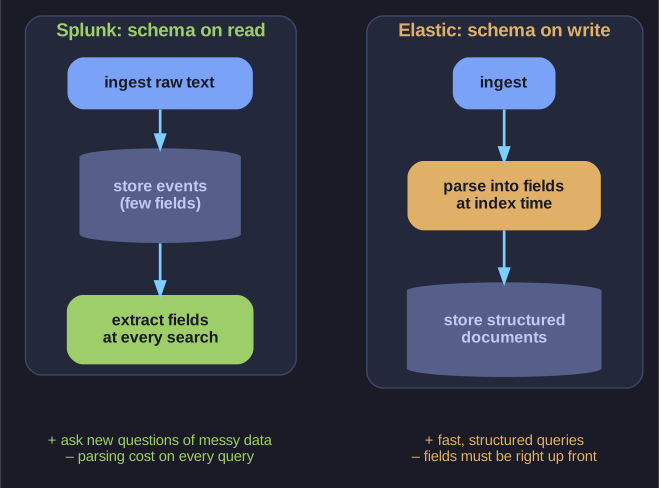
* Where the structure is imposed decides what is fast and what is flexible. *
| Splunk | Elastic Stack (ELK) | |
|---|---|---|
| Licence | Commercial; free tier limited to 500 MB ingest per day | Core free and source-available; paid tiers for extra features |
| Query language | SPL: pipeline of commands (search | stats | sort) |
Lucene query syntax / KQL for search; aggregations in visualisations, ES|QL in newer versions |
| Field extraction | Mainly at search time (schema on read) | Mainly at index time (schema on write) |
| Collection | Universal Forwarder | Beats / Elastic Agent, Logstash |
| Strength | Very powerful ad-hoc analysis, mature security apps | Flexible, scalable, cheap to start |
Neither is "the right one". Splunk shines when analysts need to ask new questions of messy data quickly. Elastic shines when data formats are known and cost matters. Many organisations meet both, which is why the lab has you try each. Splunk's free licence is what an expired trial falls back to: all core search features, but a 500 MB/day ingest cap and no user management.
Go deeper:
 Splunk — About Splunk Free — the 500 MB/day limit and what the free licence leaves out.