Pulse's headline capability is "write logic once, deploy to many chains". What does that mean, and which chains?
You develop your business logic a single time against Pulse's abstraction layer, and Pulse deploys it to any of the major blockchains — EVM chains, Stellar, Polkadot, and others — with no vendor lock-in.
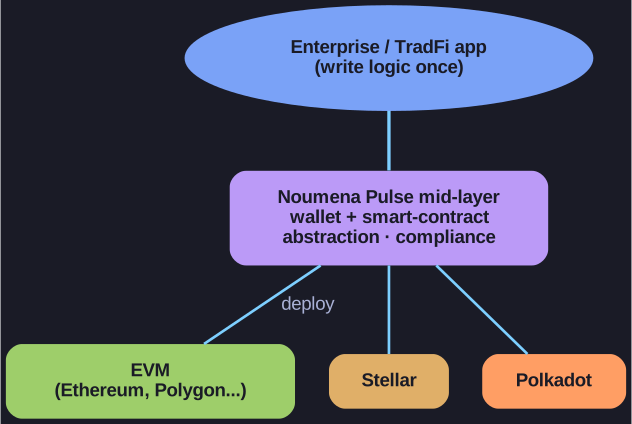
* Write logic once against the Pulse abstraction layer; deploy the same logic down to many chains. *
Normally each blockchain has its own languages, wallets, and quirks, so supporting several means rewriting for each. Pulse abstracts away that complexity: you develop logic once and deploy to all major blockchains — the EVM family (Ethereum Virtual Machine, the runtime shared by Ethereum, Polygon, Arbitrum, Base, and more), Stellar, Polkadot, and others. It is also wallet-agnostic (works with any standard institution-grade wallet or HSM — Hardware Security Module, a tamper-resistant key device) and imposes no vendor lock-in — self-hosted or cloud-native, you own your data. This "multi-chain by default" stance future-proofs a project against having to pick the one right chain up front.
Go deeper:
 Hardware security module (Wikipedia) — the tamper-resistant key device Pulse stays compatible with, alongside standard institution-grade wallets.