In the classic trolley scenario, is switching the tram onto a side track permitted, forbidden, or required?
There is no settled answer — and that is the point: consequentialist reasoning says switch (one death instead of five), while duty ethics objects that switching makes you the author of a killing rather than a bystander to deaths.
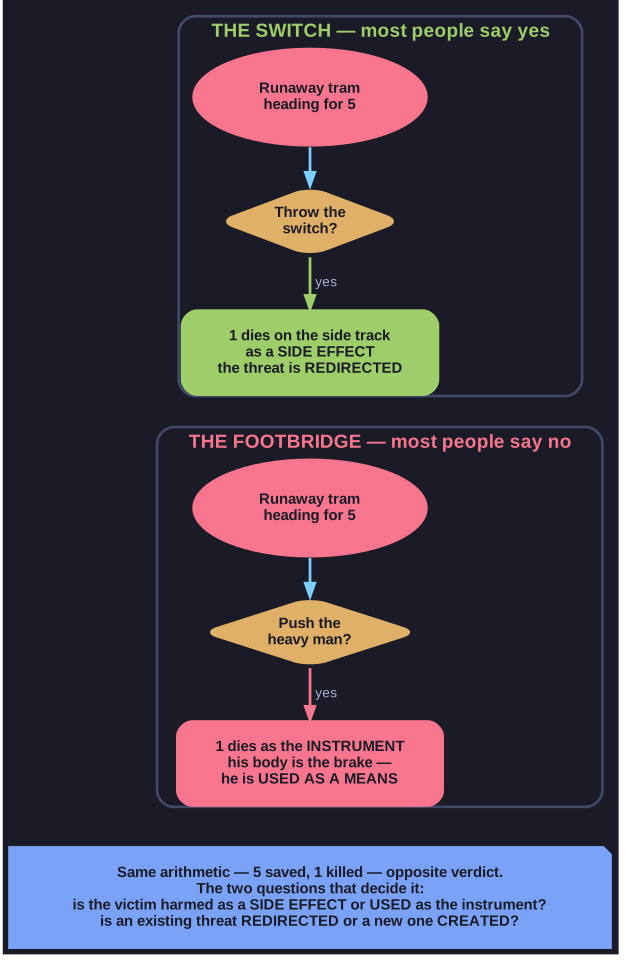
* Same arithmetic, opposite verdict — the difference is whether the victim is used as a means *
The set-up, first stated in this form in 1967 (earlier known as the Weichenstellerbeispiel, the pointsman example): a tram is out of control and about to run over five people. It could be diverted onto a side track in time by throwing a switch — where it would kill one other person instead.
The three answers and what each turns on:
- Permitted / required (consequentialist). Five deaths are worse than one; the consequences are the only thing being evaluated; failing to act is itself a choice with a worse outcome. On the strongest version, switching is not merely allowed but obligatory.
- Forbidden (strict deontological). Throwing the switch makes the death of the one person your act, not merely something you failed to prevent. The distinction between killing and letting die does moral work, and the single person has a right not to be used to improve someone else's arithmetic.
- Permitted but not required — a middle position: you may act to minimise deaths, but no one can be obliged to become the agent of a killing.
The scenario earns its fame from a comparison. Most people say yes to the switch and no to pushing a heavy man off a footbridge to stop the same tram — same arithmetic, opposite verdict. That gap is the evidence that ordinary moral judgement is not simply consequentialist: how the death is brought about, and whether the victim is used as a means, changes the answer even when the numbers do not.
Tip: When you meet a trolley variant, ask two things: is the victim harmed as a side effect or used as the instrument, and am I redirecting an existing threat or creating a new one? Nearly all the intuitive differences between variants track those two questions.
Go deeper:
 Wikipedia: Trolley problem — every variant that has been invented since 1967, and what each one isolates.
- Wikipedia: Principle of double effect — the doctrine that formalises »harmed as a side effect« versus »used as the means«.