How do the three moral theories map onto the action process of subject → action → consequences?
Virtue ethics attaches to the acting subject, duty ethics to the action itself, and consequentialist ethics to the consequences — the same process, judged at three different points.
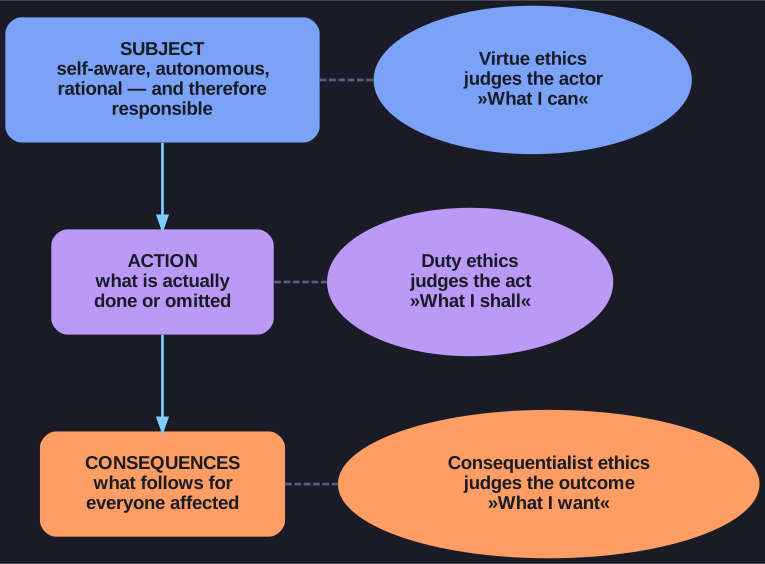
* One process, three places to look for moral quality — which is why the theories disagree about the same case *
Every action has the same structure: a subject (a self-aware, autonomous, rational being — and therefore responsible) performs an action, which produces consequences. The three theories differ in where along that chain they look for moral quality:
- Subject → virtue ethics (What I can!). Character and capability: being courageous, generous, prudent. Examples: the courage needed to free someone from an attacker; a company's courage to act ecologically even when it costs.
- Action → duty ethics (What I shall!). "Thou shalt" and "thou shalt not" sentences. An action has moral worth only when it is done out of respect for the law — not from self-interest, inclination or the prospect of advantage.
- Consequences → consequentialist ethics (What I want!). Weighing an action's usefulness against its harm, where utility takes in short- versus long-term effects, the number of people affected, and so on.
The reason the diagram is worth remembering is that it explains why the theories reach different verdicts on the same case: they are not disagreeing about the facts but reading a different part of the chain. Good intentions with bad outcomes, or a bad motive that happens to produce a good result, are not paradoxes — they are just the chain being scored at different points.
Attached to the deontological box is the strongest claim in the whole framework: there are actions that are bad no matter how much good comes of them — killing, torture, theft. They are categorically wrong and cannot be rehabilitated by cost-benefit calculation. These moral prohibitions are what protect human dignity and prevent our interests or our lives from being sacrificed to the common good.
Go deeper:
 Wikipedia: Normative ethics — the map of the three families and where the other theories (contractarianism, care ethics) sit on it.