How do Proof of Work and Proof of Stake differ, and why did chains move toward Proof of Stake?
Proof of Work secures the chain with expensive computation; Proof of Stake secures it with locked-up collateral (stake) — and the main motivation for the switch is energy: Proof of Stake can cut power use by around 99%.
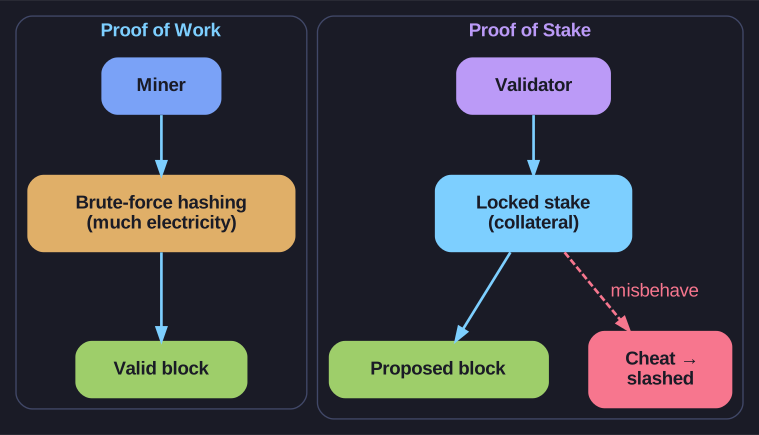
* Proof of Work spends electricity (a miner races to hash); Proof of Stake locks capital (a validator's stake is slashed if it cheats). *
| Dimension | Proof of Work | Proof of Stake |
|---|---|---|
| Sybil resistance via | Spending computation (mining) | Locking capital as collateral (staking) |
| Who makes blocks | The first node to solve the puzzle | A node randomly chosen to propose, others validate |
| Block producer called | Miner | Validator |
| Bad behaviour punished by | Wasted electricity, orphaned blocks | Slashing — losing part of the staked collateral |
| Energy cost | Very high (every node races) | Low (only one node builds; the rest just check) |
| Trade-off | Battle-tested, but power-hungry | Efficient, but staking cost can reduce decentralization |
Under Proof of Work every node burns electricity racing to solve the puzzle, causing a large environmental impact. Under Proof of Stake, validators instead post a stake — collateral that is slashed (partly confiscated) if they cheat — so honesty is enforced economically rather than by raw computation. Because only the chosen proposer does real work and the others merely validate, energy use plummets, which is the headline reason major networks migrated to it.
Go deeper:
 Proof of work — Wikipedia — the computation-based mechanism and its energy cost.
- Proof of stake — Wikipedia — validators, staking, and slashing as the low-energy alternative.