How are blocks linked into a chain, and why does that make the chain immutable?
Each block stores the previous block's hash, so the blocks form a linked sequence where every fingerprint depends on all the history before it — change anything in the past and every later block's hash breaks.
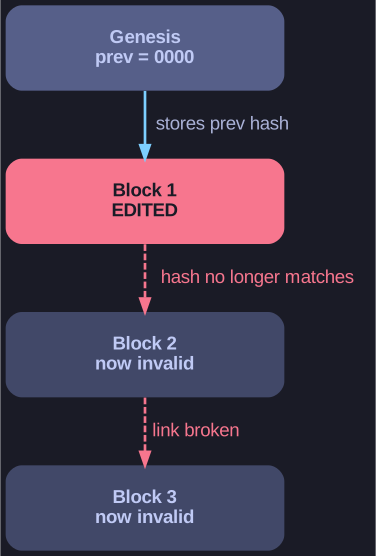
* Editing one past block changes its hash, so every downstream block's stored "previous hash" no longer matches — the whole chain after it breaks. *
Because a block's hash is computed from its contents plus the previous block's hash, the chain is cryptographically welded together. If someone edits a transaction in an old block, that block's hash changes; but the next block still stores the old hash as its "previous", so the link no longer matches and that block is now invalid — and so is every block after it, cascading to the tip of the chain. This is exactly what "immutable" means for a blockchain: not that data physically can't be altered, but that any alteration is instantly detectable because it invalidates everything downstream. The very first block, whose "previous hash" points to nothing (all zeros), is called the genesis block.
Go deeper:
 Blockchain — Wikipedia — how hash-linking makes the ledger append-only and any edit detectable downstream.