Even a perfectly secure blockchain can't guarantee an oracle's data is true. Why not, and what is this "oracle problem"?
A blockchain guarantees data was not altered after it was recorded — not that it was true when recorded. So an oracle feeding bad data becomes a single point of failure that no amount of on-chain security can fix.
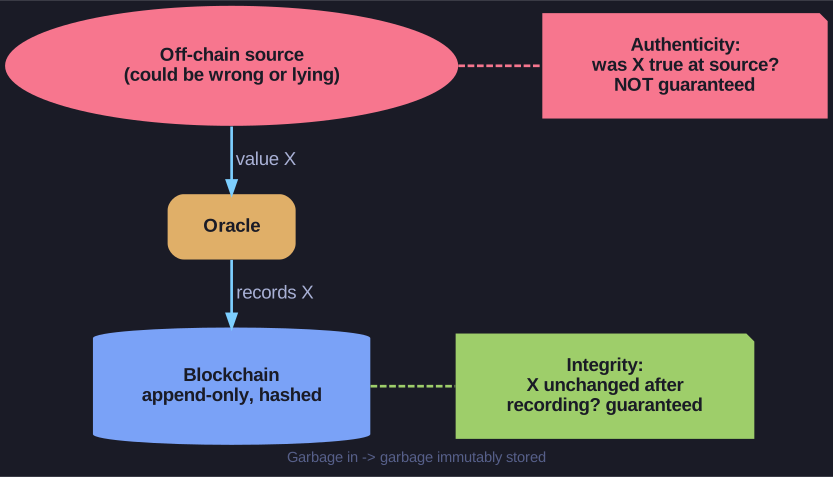
* Integrity (unchanged after recording) is guaranteed; authenticity (true at the source) is not — garbage in, garbage immutably stored. *
This is the crux distinction between integrity (the value hasn't changed since it entered) and authenticity (the value was correct at the source). A chain enforces the former beautifully and the latter not at all: garbage in, garbage permanently and immutably stored. Because a naive oracle is one trusted component that everything downstream depends on, it re-introduces exactly the centralized point of failure that blockchains were meant to remove. This is why most oracle research is really trust research: how to make off-chain data credible without a single party you must blindly believe — via decentralization, authenticity proofs, trusted hardware, or economic incentives.
Go deeper:
 Blockchain oracle (Wikipedia) — states the "oracle problem" plainly and surveys the trust approaches that answer it.
- Foundational Oracle Patterns (Mühlberger et al., arXiv) — draws the integrity-vs-authenticity line and why the oracle is the trust bottleneck.