Concretely, how big is the throughput gap between Bitcoin and a system like Visa, and what trade-off does it illustrate?
Bitcoin sustains roughly 7 transactions/second (about 66 with security-preserving tweaks); Visa peaks above 50,000 — the gap is the price of decentralization.
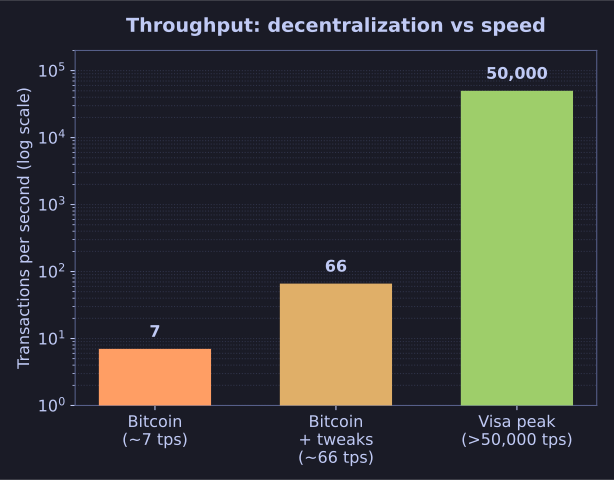
* Log scale: even with security-preserving tweaks Bitcoin stays three-plus orders of magnitude below Visa's peak — the throughput tax of open consensus. *
The log axis is what makes all three bars visible at once; each gridline is a tenfold jump, so it compresses the gap. On a plain linear axis the same three numbers look like this:
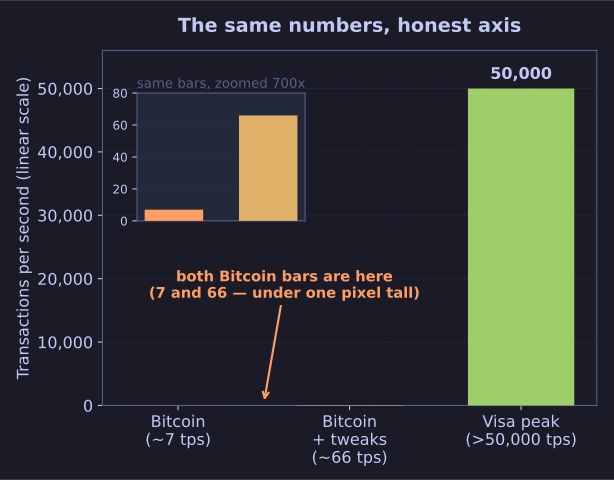
* Linear scale: Visa's bar fills the plot and both Bitcoin bars vanish into the baseline — 7 tps is 0.014% of 50,000, well under one pixel tall. You need the inset's 700x zoom to see them at all. *
These numbers make the abstract trade-off concrete: the more a system scales to many mutually-untrusting writers (decentralization), the fewer state updates it can process per unit time (throughput). Bitcoin's ~7 tps is the cost of open, trustless consensus; a centralized system like Visa skips consensus entirely and handles tens of thousands. When deciding whether to use a blockchain, this decentralization-vs-throughput tension has to be weighed alongside the "do you need it at all?" flowchart — a blockchain can be the right trust model and still be too slow for the workload.
Go deeper:
 Bitcoin scalability problem (Wikipedia) — where the ~3.3-7 tps ceiling comes from (block size, 10-minute blocks) and the tweaks that raise it.