Question
What is the difference between defining the system boundary and defining the context boundary?
Answer
The system boundary separates what you build from its environment; the context boundary separates the relevant environment from the irrelevant rest of the world.
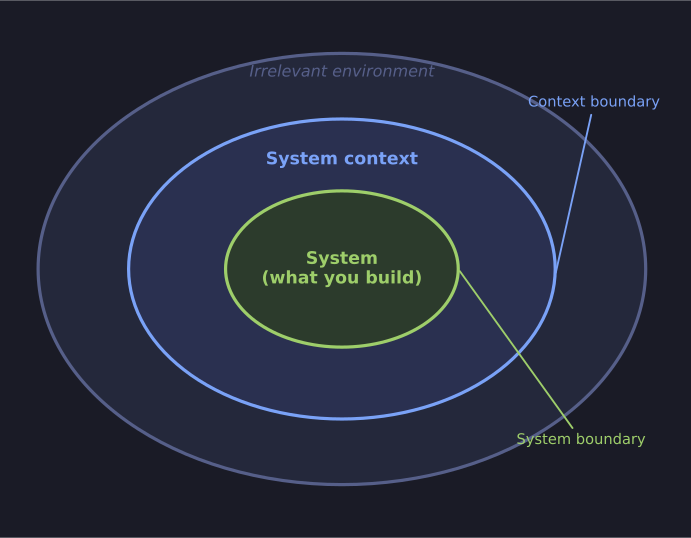
* Two nested boundaries — the system boundary divides the system from its context; the context boundary divides the relevant context from the irrelevant environment. *
- System Boundary: Determines which aspects pertain to the system to be developed and which belong in the system context
- Context Boundary: Determines which aspects pertain to the system context and which are part of the irrelevant environment
Example: For an e-commerce website:
- Inside system boundary: Shopping cart, checkout, product catalog
- In system context: Payment gateway, shipping provider, customer
- Irrelevant environment: Competitor websites, unrelated government regulations
Note saved — thanks!
Question
What are the four core activities of Requirements Engineering according to ISO/IEC/IEEE 29148:2011?
Answer
Elicitation, Documentation, Validation and negotiation, and Management — grouped into two main blocks (everything under Elicitation, plus the cross-cutting Management).
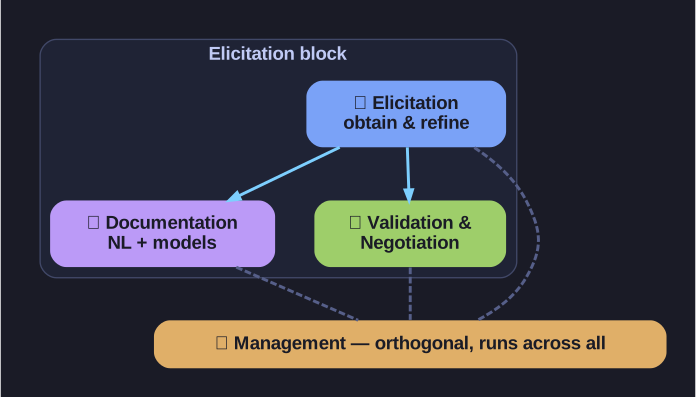
* The four RE activities — Elicitation, Documentation, Validation & negotiation, plus the cross-cutting Management. *
The standard names four core activities, but they sit in two main groups: three belong to the Elicitation block, and Management runs across all of them. That two-vs-four framing is exactly why the count can trip you up — both numbers are right, at different levels.
1. Elicitation: Using different techniques to obtain requirements from stakeholders and other sources, then refine them in greater detail. It carries two sub-activities:
- Documentation: Describing the elicited requirements adequately, using natural language or conceptual models.
- Validation and negotiation: Checking that predefined quality criteria are met; requirements must be validated and conflicts negotiated early.
2. Management: Orthogonal to all the others — measures to structure requirements, prepare them for use by different roles, keep them consistent after changes, and ensure they get implemented.
Tip: Think "EDVM" — Elicit, Document, Validate, Manage. Three sit under elicitation; Management is the umbrella that never stops.
Go deeper:
 Requirements engineering (Wikipedia) — the elicitation, documentation, validation, and management activities and where they sit in the discipline.
Note saved — thanks!