Question
What is OWASP and what are some of its key projects?
Answer
OWASP (Open Worldwide Application Security Project) is a non-profit that publishes free, vendor-neutral tools, standards, and guidance for building secure software — its best-known output is the Top 10 list of web app risks.
Why it matters: web security advice is otherwise scattered and often tied to a vendor selling a product. OWASP fills that gap with community-driven, openly licensed resources that developers and auditors worldwide treat as a common baseline. Concretely, if you need to know how to do something securely, there's usually an OWASP Cheat Sheet for it; if you need to test an app, there's ZAP.
Key projects:
- Cheat Sheet Series - Security best practices
- Dependency Track - Component vulnerability monitoring
- OWASP SAMM - Software Assurance Maturity Model
- SecurityShepherd - Security training platform
- Security Knowledge Framework (SKF) - Security requirements
- ZAP - Web application security scanner
- ModSecurity Core Rule Set - WAF rules
- Top10 - Most critical security risks
Go deeper:
 OWASP (Wikipedia) — encyclopedic overview of the foundation, its history, and its flagship projects.

Note saved — thanks!
Question
What is the OWASP Top 10 and what is it used for?
Answer
An awareness document ranking the ten most critical web-application security risks, refreshed every few years from real-world breach data — used as a teaching tool and a baseline checklist, not a complete security standard.
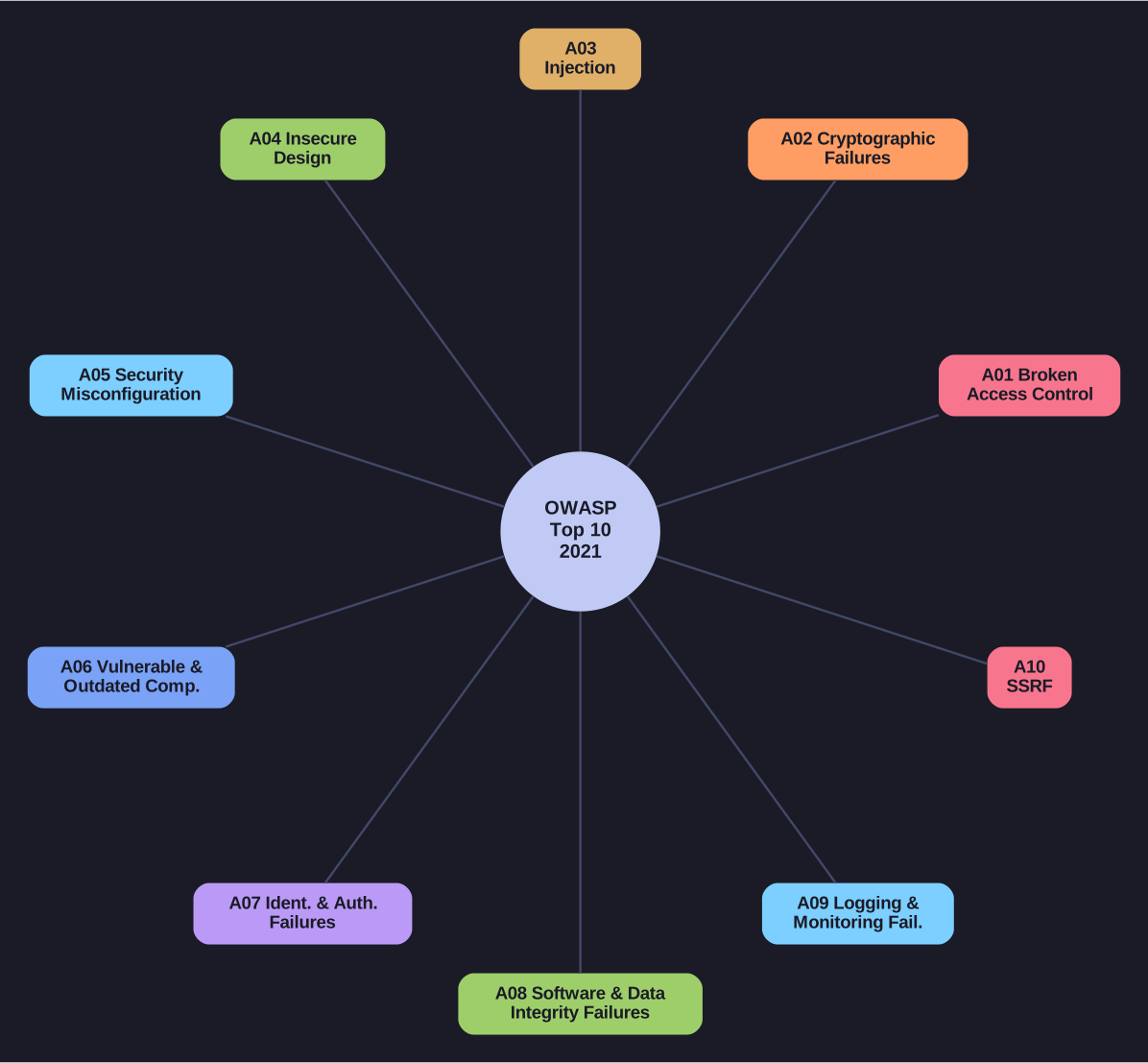
* The ten OWASP Top 10 2021 risk categories — a ranked awareness list of the most critical web risks. *
It's deliberately a "top 10," not "everything": by focusing teams on the risks that actually cause the most damage in the wild, it gives developers and managers a shared, prioritized starting point. Each entry pairs a vulnerability class with prevention guidance.
Uses:
- Education — onboarding developers to the most common ways apps get hacked.
- Checklist — a minimum bar to review against during development and threat modeling.
- Common language — when a report says "this is an A01," everyone knows what that means.
Important caveat: it's awareness-level, not exhaustive. Passing "no Top 10 issues" does not mean an app is secure; deeper standards like the OWASP ASVS exist for thorough verification.
Updated periodically (2017 → 2021 → 2025) based on real-world data and industry surveys.
Note saved — thanks!