Question
What is the difference between data, information, and knowledge?
Answer
Data is raw material, information is structured data in context, and knowledge is interconnected information held by a person.
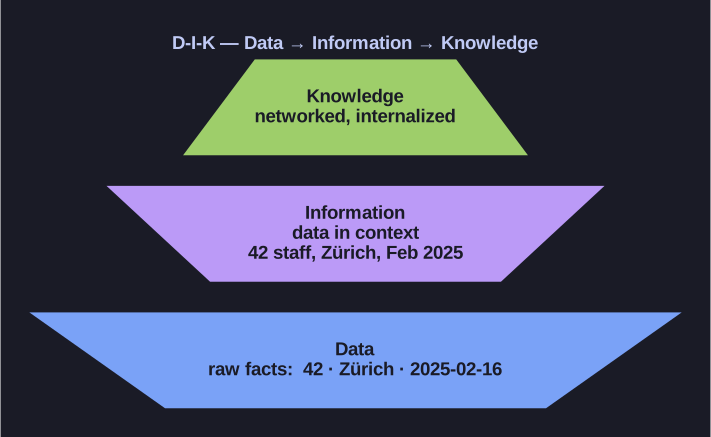
* The D-I-K pyramid — raw Data at the base, Information (data in context) above, Knowledge at the top. *
Think of it as a pyramid with three layers:
| Level | Description | Example |
|---|---|---|
| Data | Raw, unprocessed facts — numbers, words, symbols | 42, Zürich, 2025-02-16 |
| Information | Data linked together into interpretable context | "42 employees in the Zürich office as of Feb 2025" |
| Knowledge | Networked information, internalized by a person | Understanding that the Zürich office is understaffed and needs hiring |
Why it matters for InfoSec: You must protect all three levels. Data breaches expose raw data, but the real damage comes when attackers combine data into information and derive knowledge (e.g., trade secrets, strategic plans).
Tip: Remember D-I-K bottom-up: Data is dumb, Information is interpreted, Knowledge is know-how.
Go deeper:
 DIKW pyramid (Wikipedia EN) — the data → information → knowledge (→ wisdom) hierarchy and the debate over how the layers relate.
![A standard representation of the pyramid form of DIKW models, from 2007 and earlier[1][2]](https://upload.wikimedia.org/wikipedia/commons/thumb/0/06/DIKW_Pyramid.svg/960px-DIKW_Pyramid.svg.png)
Note saved — thanks!
Question
What are the main categories of threat actors in information security?
Answer
Threat actors range from frustrated insiders to intelligence agencies — anyone with motive and opportunity to misuse information.
Key threat actor categories:
- Frustrated employees — The #1 insider threat. Disgruntled staff with legitimate access can cause massive damage
- Intelligence agencies (e.g., Echelon, Onyx) — State-sponsored surveillance and espionage programs
- Industrial espionage — Competitors stealing trade secrets, R&D data, or client lists
- Hackers/Crackers — External attackers exploiting technical vulnerabilities
- Whistleblowers — Insiders leaking information they believe the public should see (e.g., Edward Snowden)
- Software developers — Can intentionally embed backdoors in code
- External contractors — Third-party staff with access but less loyalty/oversight
- System administrators — Have privileged access to virtually everything
Key insight: The biggest threats often come from inside the organization, not outside. Studies consistently show that insider threats account for a significant portion of security incidents.
Go deeper:
- Threat actor (Wikipedia EN) — how attackers are categorised by motive, capability, and intent.
- Insider threat (Wikipedia EN) — why people with legitimate access are so hard to defend against.

Note saved — thanks!