Quiz Entry - updated: 2026.10.15
Why are microservice-based applications a strong case for automation?
Microservices split an application into many small components that scale, fail and redeploy independently. There are far too many moving parts to manage by hand, so automation becomes a prerequisite.
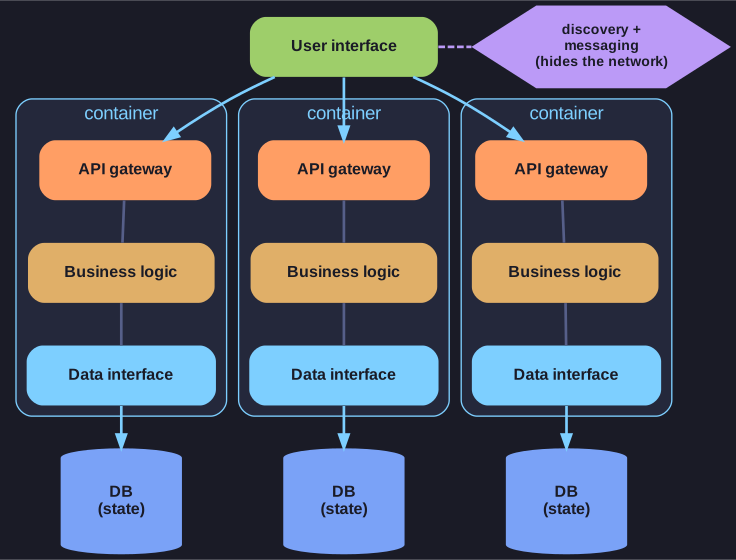
* Each service runs in its own container with its own data store; discovery and messaging connect them without fixed addresses. *
A microservice architecture builds an application from small, lightweight components. Typically they are:
- isolated in containers,
- connected through discovery and messaging services, which hide the network details so services find each other by name rather than fixed IPs,
- backed by resilient, scalable databases, which hold the state so the services themselves can stay stateless and replaceable.
| Benefits | Challenges |
|---|---|
| Scalability: services scale across many servers or several geographically separate cloud regions, with load balancing, which removes single points of failure | More complexity: many moving parts to configure and deploy, plus demanding operations such as scaling on demand and self-healing |
| Infrastructure does the work: the container platform increasingly provides scaling on demand, self-healing and more | Automation is a prerequisite: manual methods cannot keep up with deploying and managing dynamic applications |
The two columns are one idea seen from both sides. The architecture gains its strength from having many independently managed pieces, and it is that same number of pieces that makes manual operation impossible.
Go deeper:
 Martin Fowler & James Lewis — Microservices — the classic article defining the style and its trade-offs.
- Microservices — Wikipedia — overview with the criticisms and operational costs.