When you set out to analyse why a command-driven procedure — a surgical protocol, a weapons drill, a military order — is built the way it is, what five questions structure that analysis?
Five questions: why is it built this way, where does questioning fit, how can the led still contribute, what feedback improves it, and where does Speak-up fit?
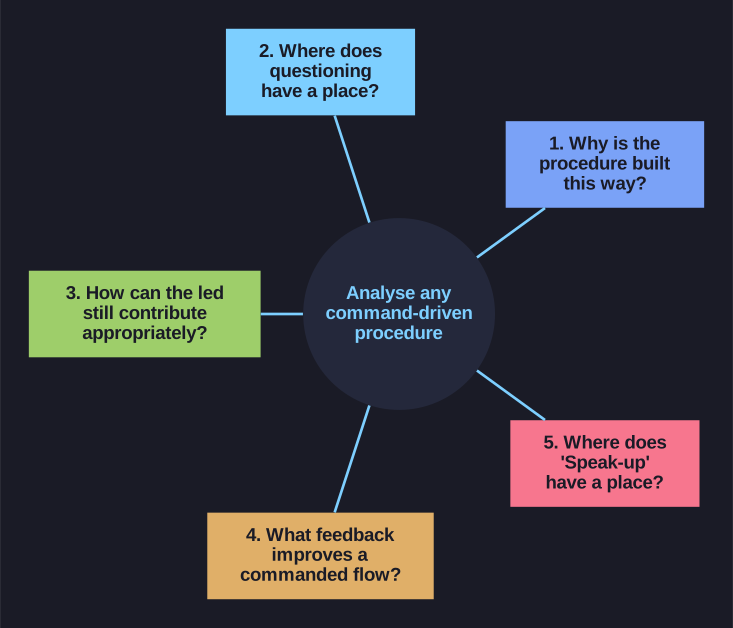
* One reusable lens: point these five questions at any command-driven procedure and its logic — and its safeguards — become visible. *
Rather than judging a command-driven setting as either "blind obedience" or "proper critical thinking", this lens interrogates it as a designed system:
- Why is the procedure the way it is — what wider context and constraints shaped it?
- Where does critical questioning have a place — which phase is built to absorb it?
- How is it ensured the led (or commanded) can still contribute appropriately — what channel lets them feed in?
- What feedback improves a commanded procedure — which loops carry lessons back into it?
- Where does "Speak-up" have a place — where is the protected exception for a safety concern?
Applied to the operating theatre, the drill hall, the resuscitation and the staff order alike, the five questions keep surfacing the same answer — the thinking is separated in time (rigorous before and after, decisive during), with Speak-up and structured feedback as the safeguards. The lens is the transferable tool; the three-phase split is what it repeatedly reveals.
Tip: Questions 2–5 map onto the safeguards you'll meet again and again — timing (Beobachten – Anmerken), contribution and Speak-up channels, and feedback loops (debrief, M&M, CIRS). Question 1 is just "understand the system before you criticise it."
Go deeper:
 Wikipedia — Socratic questioning — the disciplined use of structured questions to probe reasoning, assumptions and evidence.
- Wikipedia — After-action review — the structured "what feedback improves the procedure" step (question 4) as a formal practice.