What structural changes are squeezing journalism ("media in transition"), and why does it matter for democracy?
Newsrooms are cutting staff and losing the resources for deep investigation, while the institutions they cover hire ever more communications staff — shifting power toward the sources and raising the spectre of state-funded media.
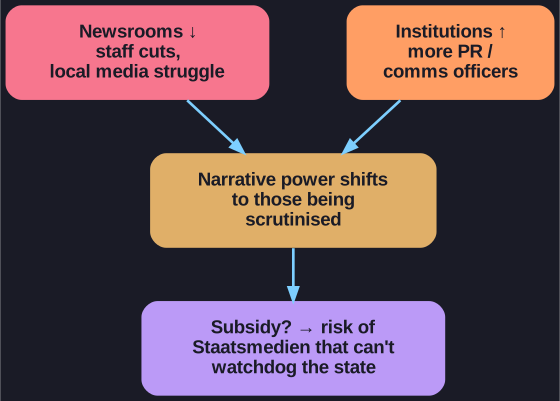
* As reporters shrink and PR grows, narrative power shifts to the scrutinised — and the proposed fix, state subsidy, risks a press that can't watchdog its funder. *
Several trends compound each other (German: Medien im Wandel, media in transition):
- Media houses are cutting staff heavily, and local media in particular are struggling to survive.
- Meanwhile government, federal administration and cantons employ ever more communications officers — professional spin on the source side.
- The result: media lose the resources for in-depth research just as the bodies they should scrutinise get better at managing their message.
- Politicians call for state support of the media to fill the gap — which raises an uncomfortable question: does subsidy lead to state media (Staatsmedien) that can't credibly watchdog the state that funds them?
This matters because the watchdog role depends on an independent, well-resourced press. As the imbalance grows — fewer reporters, more PR — the power to set the narrative shifts from the journalists to the people they are supposed to hold accountable.
Go deeper:
 Decline of newspapers — the staff-and-revenue squeeze hollowing out newsrooms.
- State media — why funding from the state endangers the independence the watchdog role needs.