What is the difference between a private channel, an authentic channel and a secure channel?
Private protects confidentiality; authentic protects origin and integrity; secure combines both. Availability and endpoint security remain separate requirements.
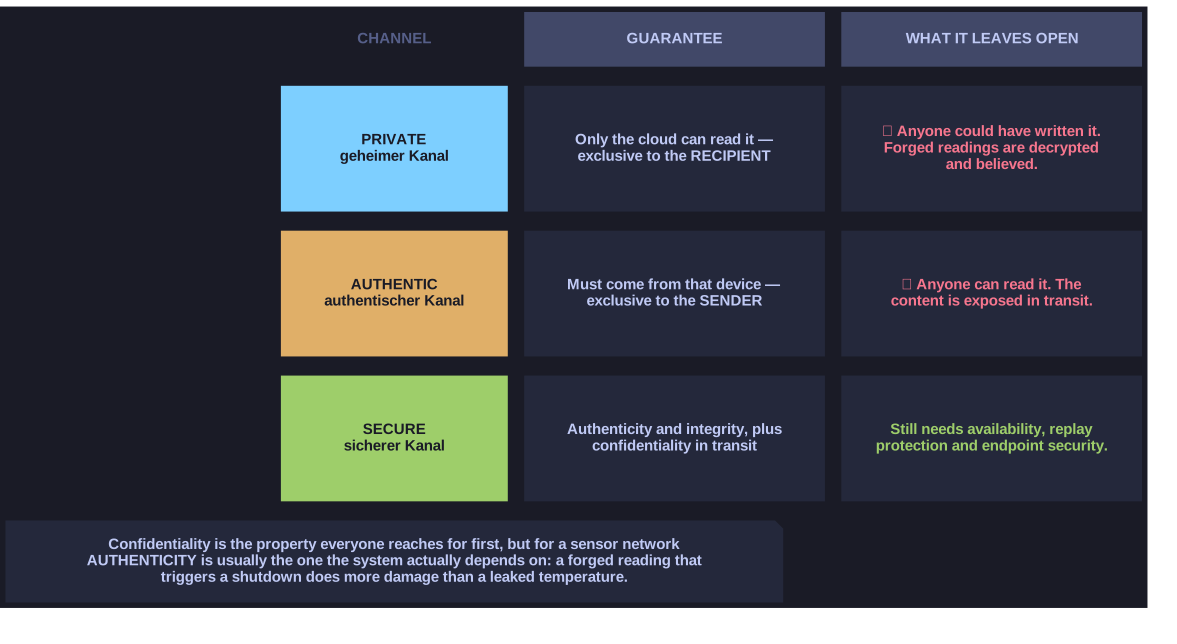
* Confidentiality and authenticity solve different problems; combining them does not by itself ensure availability or protect compromised endpoints. *
Take a device sending readings to a cloud backend:
| Channel | Guarantee | What it leaves open |
|---|---|---|
| Private (geheimer Kanal) | Only the cloud can read the message — it is exclusive to the cloud | Anyone could have written it. An attacker can inject forged readings that the cloud will happily decrypt and believe |
| Authentic (authentischer Kanal) | The cloud knows any message arriving over this channel must originate from that device — exclusive to the device | Anyone can read it. The content is exposed in transit |
| Secure (sicherer Kanal) | Both: the message must come from that device and can only be read by the cloud | Neither of those two gaps; availability, endpoint compromise and replay protection still need consideration |
The distinction matters because the two properties solve genuinely different problems, and IoT systems often need the one people think about least. Confidentiality is the property everyone reaches for first, but for a sensor network, authenticity is usually the property the system actually depends on — a forged temperature reading that triggers a shutdown does more damage than an eavesdropped one.
Tip: map the three onto the usual security vocabulary: private = confidentiality, authentic = authenticity and integrity of origin, secure = both. And note the asymmetry — a private-only channel is a channel where an attacker can talk to you securely.
Go deeper:
 Wikipedia — Secure channel — the same three-way distinction in formal terms: confidential resists overhearing, authentic resists tampering, secure resists both.