Quiz Entry - updated: 2026.10.15
What is the difference between a northbound and a southbound API?
A northbound API connects the controller to the management software and applications above it (typically REST over TLS). A southbound API connects the controller to the individual devices below it and pushes configuration changes down to them.
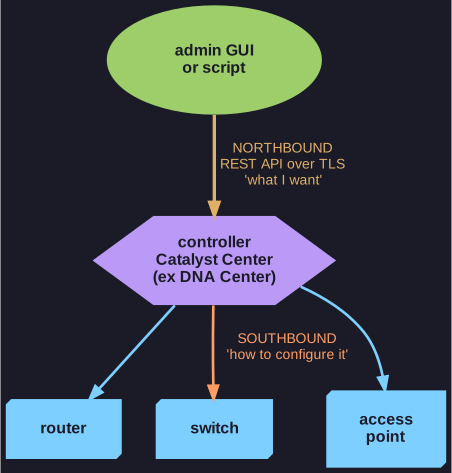
* Intent comes in northbound over an encrypted REST API; the controller turns it into device configuration and pushes it southbound. *
Cisco DNA Center (now Cisco Catalyst Center) is a typical example:
- An admin changes a switch's configuration in the controller's management GUI or through a script.
- That request reaches the controller over its northbound REST API. Because it carries credentials and configuration, this traffic should be encrypted, for example with TLS.
- The controller translates the change and sends it over a southbound API and a programmatic interface to the affected routers, switches and wireless access points.
| Northbound | Southbound | |
|---|---|---|
| Connects | Controller ↔ applications / management software | Controller ↔ network devices |
| Direction of intent | "What I want" (business level) | "How to configure it" (device level) |
| Typical technology | REST API over HTTPS | OpenFlow, NETCONF, RESTCONF, CLI over SSH |
Go deeper:
 Northbound interface — Wikipedia — the term and how it contrasts with southbound.
- Cisco Catalyst Center API documentation — the northbound REST API of the controller used as the example.