What is the "Circle of Control" idea, and how does it tell you what's worth critically questioning?
Direct your critical energy at what you can actually influence; a fixed external rule (like a regulation) is often outside your control to change in the moment, so questioning it then is wasted effort.
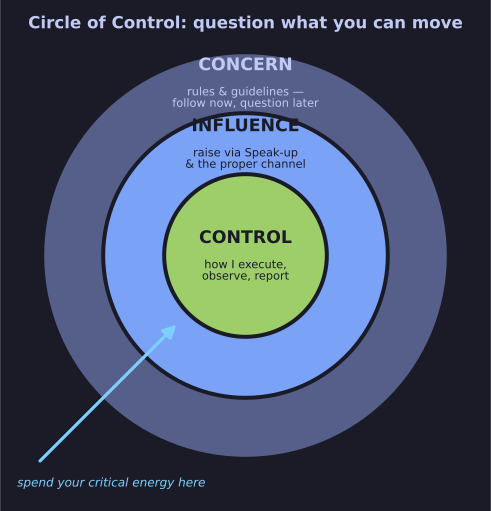
* Aim critical questioning at what you can move (how you execute, observe, report); follow fixed rules now and challenge them later through the proper channel. *
When you spot something that seems wrong, the Circle of Control asks: is this within my power to change here, or not?
- Some things — how I execute my task, what I observe, what I report — are inside my circle.
- Other things — the requirements of a regulation (Reglement), an international guideline — are outside it, at least in the moment. The right response is to follow them now and challenge them through the proper channel later (review, the body that owns the rule).
This protects against two failure modes: paralysing yourself by fighting fixed constraints mid-task, and the cynicism of "why bother questioning anything". You question what you can move.
Tip: It pairs with the timing principle: where you can question (your circle) and when you can question (the review, not the crisis) together decide whether raising a concern is useful or just disruptive.
Go deeper:
 Wikipedia — The 7 Habits of Highly Effective People — Covey's Circle of Influence vs Circle of Concern, the source of this idea.
- Wikipedia — Locus of control — the psychology of what we treat as within vs outside our power.