What is monitoring, and which four questions does any monitoring setup ultimately answer?
Monitoring is the continuous, timely observation of components against defined parameters — and whatever the technology, it answers: what exists, does it work, how well does it work, and how much of it is being used?
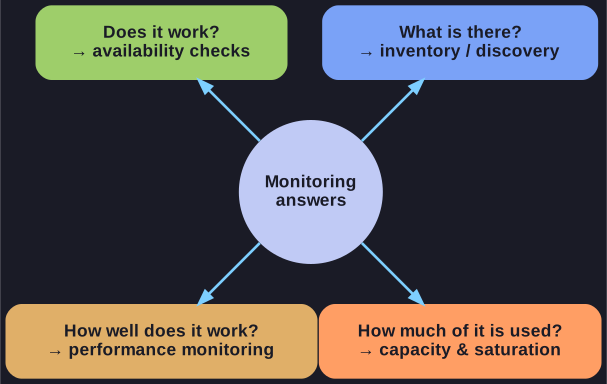
* Four questions, four practices — most immature setups only ever answer the second. *
Monitoring watches processes, activities and components in an IT environment while they run, checking in near real time whether each one is inside its defined parameters. The goal is either to keep operations running smoothly or to catch problematic situations as early as possible — and the second is what distinguishes it from the classic reactive approach.
The four questions are a useful checklist because each maps to a different practice:
| Question | What it really asks | Practice |
|---|---|---|
| What is there? | Do we know our own estate? | Inventory / discovery |
| Does it work? | Is it up and reachable? | Availability checks |
| How well does it work? | Within acceptable latency and error rates? | Performance monitoring |
| How much of what is there is used? | Are we near a limit? | Capacity and saturation |
Most immature setups answer only the second question. The first is the embarrassing one — you cannot monitor a server you forgot you had — and the fourth is the one that turns monitoring from firefighting into planning.
Go deeper:
 Google SRE Workbook — Monitoring — what a monitoring system must do, and the trade-offs between dashboards, alerts and analysis.