Quiz Entry - updated: 2026.09.29
What is a deque (double-ended queue), and what are its operations?
A deque ("deck") allows inserting and removing at both ends: addFirst, addLast, removeFirst, removeLast, plus first() and last() to look without removing; reading from an empty deque returns null.
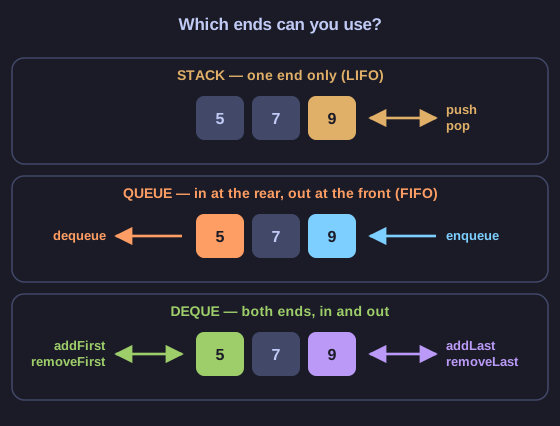
* A stack uses one end, a queue uses each end for one job, a deque uses both ends for everything. *
| Operation | What it does |
|---|---|
addFirst(e) |
insert at the front |
addLast(e) |
insert at the rear |
removeFirst() |
remove and return the front element |
removeLast() |
remove and return the rear element |
first() / last() |
return the front / rear element without removing it |
size(), isEmpty() |
as for stack and queue |
The name is short for Double-Ended QUEue, and it is pronounced like "deck".
A deque is the generalisation of both earlier ADTs. Use only addLast and removeLast and it behaves as a stack. Use only addLast and removeFirst and it behaves as a queue. That is why Java's ArrayDeque and Python's collections.deque are the recommended types for stacks and queues alike.
Go deeper:
 Double-ended queue — operations, implementations and language support.
- java.util.Deque — the interface's table mapping stack and queue methods onto deque methods.