What does the registration authority (RA) do, and what are its three steps?
The RA is responsible for registering and identifying subjects and, on success, authorises the creation of a digital identity. Its three steps are identification (who are you?), verification (are your statements true?) and registration (we take you into the system).
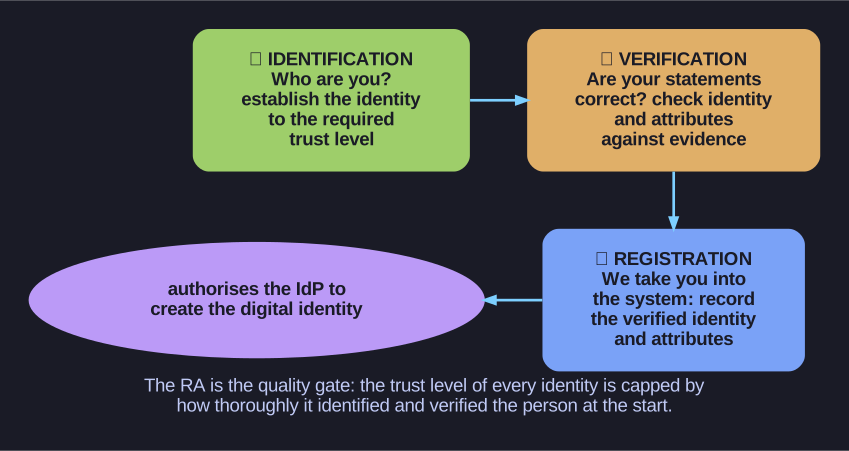
* The registration authority's three steps, ending in the go-ahead for a digital identity. *
| Step | Question | What happens |
|---|---|---|
| Identification | Who are you? | The identity is established to the required trust level |
| Verification | Are your statements correct? | Identity and attributes are checked against evidence |
| Registration | We take you into the system | The verified identity and attributes are recorded |
The RA is the quality gate of an IAM system: the trust level of every identity is capped by how thoroughly the RA identified and verified the person at the start. That is why RAs are separated from IdPs in high-assurance systems (passport offices, banks, certification authorities), and why in a plain web shop the "RA" is just the sign-up form with an e-mail confirmation.
Synonyms: registration office (Registrierungsstelle), identification office (Identifizierungsstelle).
Go deeper:
 Registration authority (NIST glossary) — the formal definitions, from the PKI world where the RA and CA split originated.