What does a "business-first" monitoring strategy mean in practice, and why start there?
Start from the critical business services and work down to the technology, not the other way around — the guiding question is "which outages cost the most money or reputation?"
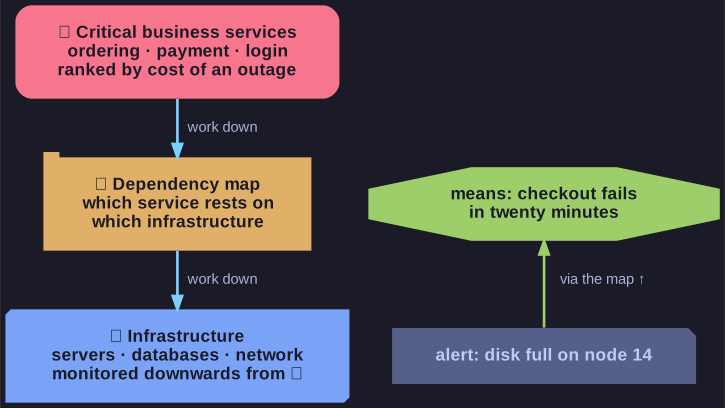
* Rank the services by what an outage costs, map their dependencies, then monitor downwards — the map is what turns a disk alert into a business statement. *
The instinctive approach is bottom-up: monitor every server, then every service, then eventually get to the applications. It produces thousands of checks, an enormous alert volume, and still no answer to "is the ordering process working?"
The business-first approach inverts it:
- List the critical business services — ordering, payment, customer login — and rank them by what an outage costs in money and reputation.
- Document the dependencies between each service and the infrastructure underneath it. This is the step everyone skips, and it is the one that turns a red infrastructure alert into a statement about business impact ("this database backs checkout").
- Monitor downwards from there, so that every alert can be traced to what it means for a service someone actually pays for.
The dependency map is what makes prioritisation possible during an incident: with it, "disk full on node 14" becomes "checkout will fail in twenty minutes", and the on-call engineer knows which of six simultaneous alerts to handle first.