Quiz Entry - updated: 2026.09.17
What defines a user-centric (decentralised) identity?
The user controls their digital identity and holds their own personal data, never a central service; there is no central store of identity data or authentication means, and the issuer is not involved when the identity is used, so it receives no usage data.
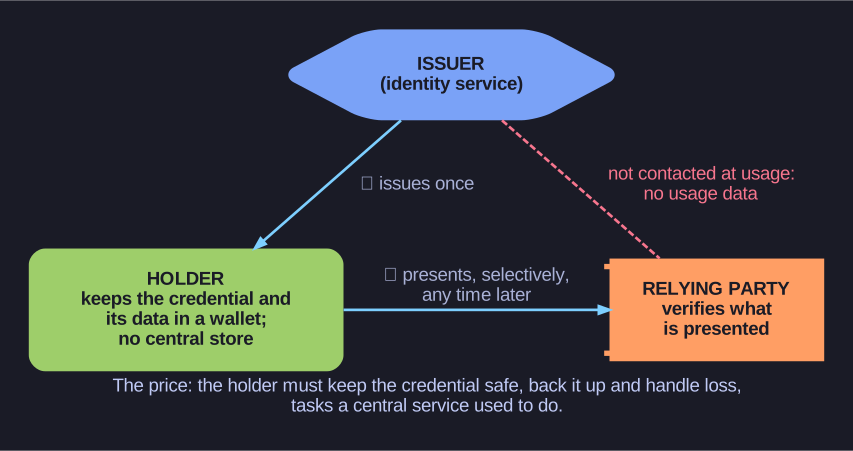
* The issuer hands over the credential once and is out of the loop whenever it is used. *
Three properties follow from one another:
- The user is in possession of the identity and its data. Nothing about them sits in a central account that some service operates.
- No central storage of identity data and authentication means, so there is no honeypot for attackers and no single point of failure for the user.
- The issuer is out of the loop at usage time. It issued the credential once; whenever the user presents it to a relying party, the issuer is not contacted and learns nothing about where or how often the identity is used.
The price is that responsibilities move to the user: they must keep the credential safe, back it up and handle loss, tasks a central service used to do for them.
Go deeper:
 Self-sovereign identity (Wikipedia) — the fully user-controlled vision: decentralised identifiers, verifiable credentials and wallets.