Quiz Entry - updated: 2026.09.17
What decides whether an observability programme succeeds, and how do they usually fail?
Success needs people, processes, technology and governance together — and initiatives fail on tool sprawl, data silos, unclear responsibilities, alert fatigue, missing standards and a purely technical focus with no business relevance.
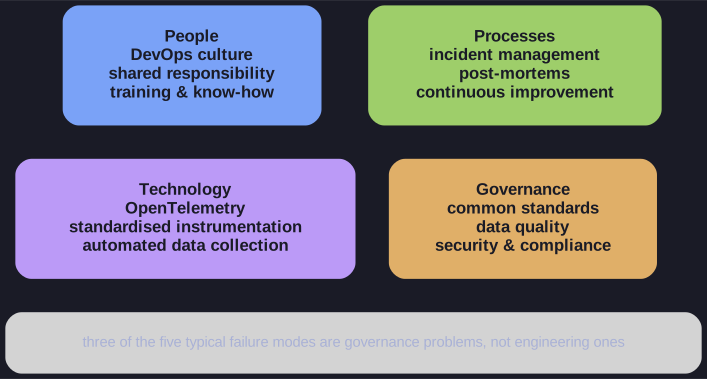
* Four dimensions, one programme: three of the typical failure modes live in the governance box. *
The four success factors:
| Dimension | What it requires |
|---|---|
| People | DevOps culture, shared responsibility for running what you build, training and know-how |
| Processes | Incident management, post-mortems, continuous improvement |
| Technology | OpenTelemetry, standardised instrumentation, automated data collection |
| Governance | Common standards, data quality, security and compliance |
The typical failure modes:
- Too many tools and data silos — each team picks its own, nothing correlates, and the cross-service question stays unanswerable.
- Unclear responsibilities — everyone can see the dashboard, nobody owns the signal.
- Too many alerts — alert fatigue, and the important message drowns.
- No standards — different log formats, different metric names, nothing comparable across teams.
- A purely technical focus — impressive dashboards with no link to business relevance, which is how the budget disappears at the next review.
Three of the five are governance problems, not engineering ones. That is the argument for treating standards and ownership as part of the project rather than as paperwork to be added later.