Quiz Entry - updated: 2026.07.30
What are the three working steps of a critical-thinking process when you face a problem?
Define the problem → research it from diverse, vetted sources → check yourself for bias before concluding.
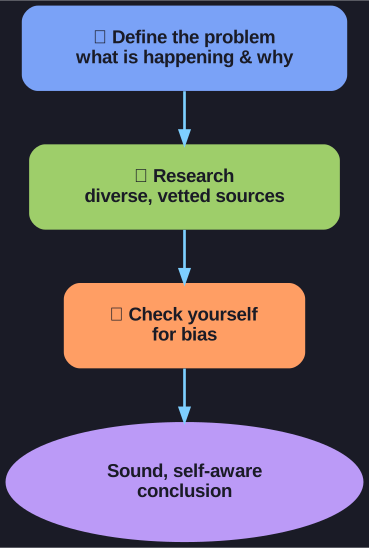
* Frame the problem, research it widely, then audit your own bias before concluding. *
- Define the problem. Ask what is actually happening, why the situation is the way it is, what your initial hypothesis is, and what the possible solutions might be. You can't think clearly about a problem you haven't stated clearly.
- Research — but beware bubbles. Deliberately gather different sources rather than ones that already agree with you (filter/echo "bubbles" feed you confirmation, not truth), and judge each source's relevance: how reliable is it, how old is it, how much does it really tell you?
- Stay unbiased. Before you settle, interrogate yourself: Do I already have assumptions? Have I overlooked something? Have I considered all the perspectives?
The order matters: jumping straight to "solutions" without framing the problem or checking your own bias is exactly how confident-but-wrong conclusions happen.
Go deeper:
 Wikipedia — Confirmation bias — the pull that makes step 2 (diverse sources) and step 3 (self-check) so necessary: we favour evidence that fits what we already think.