Quiz Entry - updated: 2026.10.15
What are the three stages of the Walk-Run-Fly automation progression?
- Walk: read-only automation (collect and check configuration).
- Run: write changes through policies and self-service.
- Fly: deploy apps, infrastructure and network config through CI/CD, steered by telemetry.
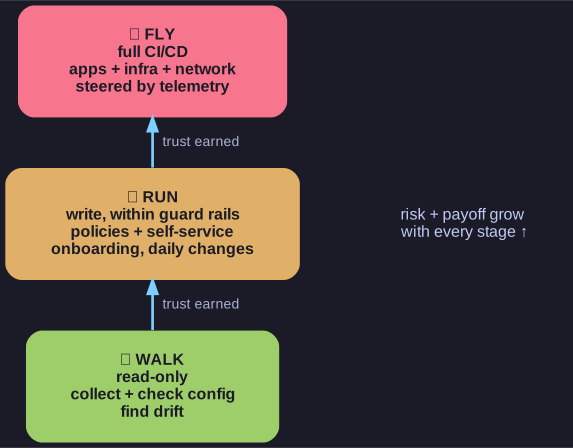
* Each stage adds write power, and so risk; trust earned in one stage unlocks the next. *
The progression (from Cisco's DevNet Automation Exchange) describes how an organisation grows into automation safely, each stage building trust for the next:
| Stage | What the automation does | Typical use |
|---|---|---|
| Walk | Only reads: gathers configuration and state from devices | Audit configs, detect drift, find what is out of compliance |
| Run | Writes, but within guard rails: policies and self-service across domains | Users safely roll out their own infrastructure and network updates, onboarding workflows, daily config changes |
| Fly | Full pipeline: apps, infrastructure and network config deployed through CI/CD | Proactive management of users and devices, insights from telemetry |
Read-only comes first because it cannot break anything, yet it already pays off: once you can see that a config deviates from the standard, the next logical step is to bring it back in line, which is where Run begins.
Tip: You walk before you run, and you run before you fly. Each stage adds risk, so each needs the confidence earned in the one before.
Go deeper:
 Cisco DevNet Automation Exchange — the catalogue of walk/run/fly automation solutions the progression comes from.