What are the six layers of the IoT technology stack, from device to human value?
Device Connection → Data Sensing → Communication → Data Analytics → Data Value → Human Value: a ladder that turns a connected piece of hardware into something a person actually benefits from.
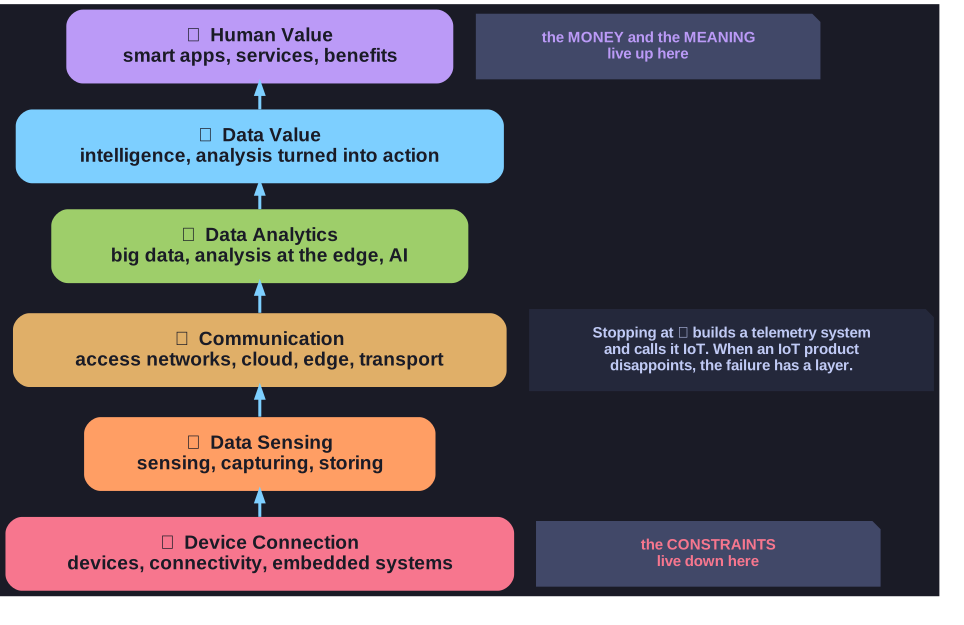
* The six layers turn a device connection into human value, with each layer building on the one below. *
- Device Connection — IoT devices, connectivity, embedded and intelligent systems. Getting the thing built and attached to a network at all.
- Data Sensing — sensing, capturing and storing data. The device now produces readings.
- Communication — access networks, cloud, edge, data transport. The readings move off the device.
- Data Analytics — big-data analytics, analysis at the edge, artificial intelligence. Readings become patterns.
- Data Value — intelligence, analysis converted to action, processes. Patterns become decisions.
- Human Value — smart apps, services, benefits, experiences. Decisions become something a person notices.
The point of laying it out as a stack is that the money and the meaning live at the top, but the constraints live at the bottom. A project that stops at layer 3 has built a telemetry system and called it IoT; the economic argument — the "next economic revolution" framing, with projections of tens of billions of connected devices — only works if the chain reaches layer 6.
It is also a useful diagnostic. When an IoT product disappoints, the failure usually has a layer: no reliable link (3), data nobody analyses (4), analysis nobody acts on (5), or action nobody experiences as valuable (6).
Tip: read the stack as a sentence — connect, sense, transport, analyse, decide, benefit. Six verbs, in order.
Go deeper:
 Wikipedia — Edge computing — where the analytics and data-value layers physically run, and why moving them closer to the sensor cuts both latency and bandwidth.