Quiz Entry - updated: 2026.10.15
What are the phases of a canary release?
Old version serves 100% → the canary gets a small share (for example 5%) → the canary is monitored → roll back on problems, or widen step by step to 100% on success.
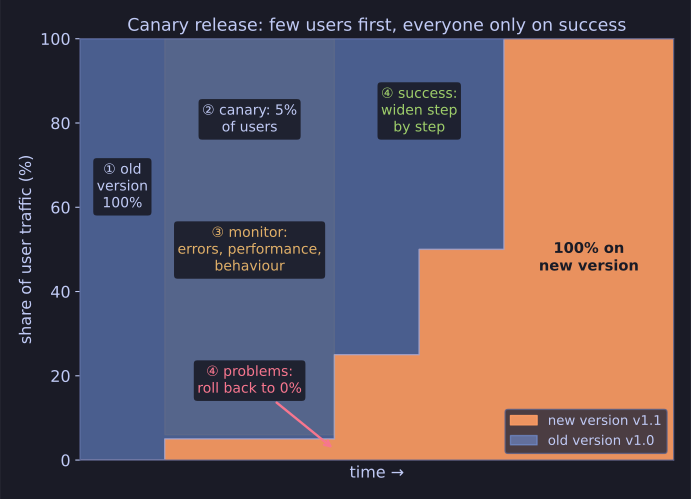
* Old version first, then a 5% canary under close monitoring, then step-by-step widening on success or a rollback on problems. *
- Old version live. All users use the stable version (v1.0).
- Canary release. A small user group, for example 5% of traffic, is routed to the new version (v1.1 canary). The remaining 95% stay on v1.0.
- Monitoring. The new version is watched closely: error rate, performance and user behaviour, compared against the stable version.
- Decision.
- Problems: roll back. The 5% go back to v1.0.
- Success: widen the rollout step by step until v1.1 serves 100%.
Phase 3 is the reason observability is a prerequisite. Without metrics there is nothing to base the roll-back-or-widen decision on, and the canary is just a slow, risky release.
Go deeper:
 Spinnaker — Automated Canary Analysis — how a pipeline judges a canary automatically.