How does the UML information model relate subject, identity, attribute, identifier and digital identity, and which identities matter for IAM?
A subject (real world) contains properties; an identity (digital world) represents exactly one subject and contains one or more attributes, each representing a property, with the identifier as a special attribute. Identity has two specialisations, the physical ID document and the digital identity, and for IAM only digital identities that link to the subject's authentication means are relevant.
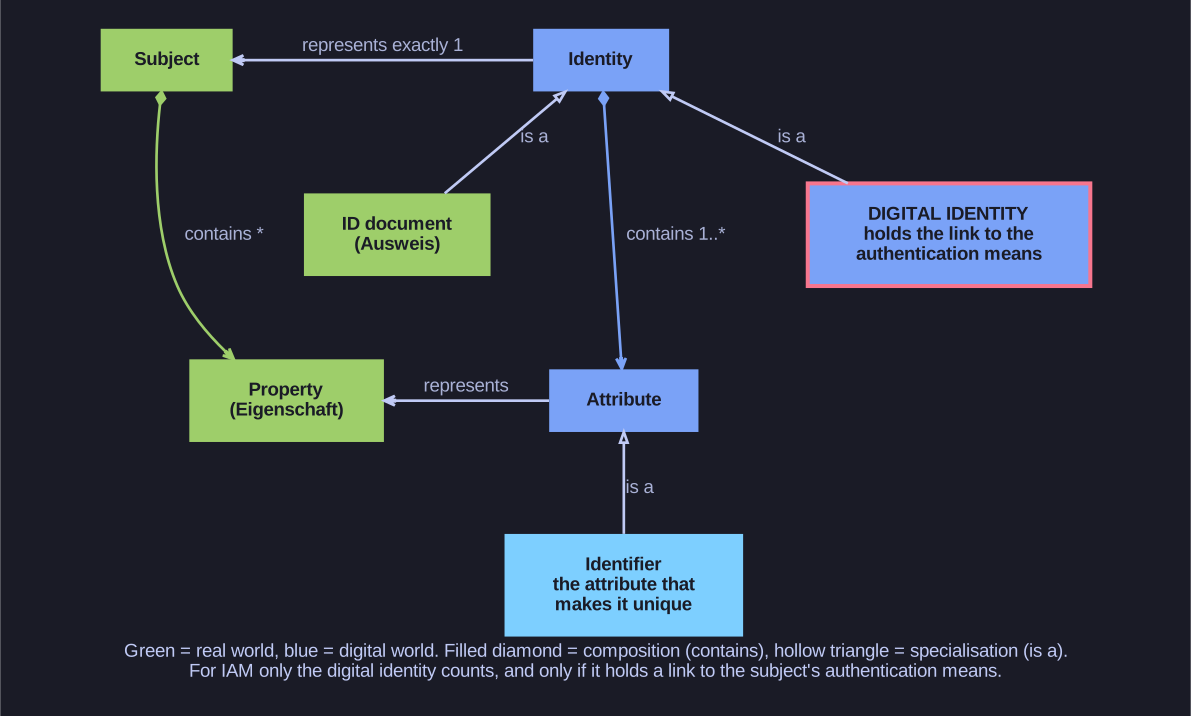
* The information model: a subject and its properties in the real world, an identity and its attributes in the digital world. *
The model has a green real-world side and a blue digital side:
- Subject (real) is composed of properties (real).
- Identity (digital) represents exactly one subject and is composed of one or more attributes (digital); each attribute represents a property.
- Identifier is a specialised attribute: the one that makes the identity unique.
- Identity is specialised into Ausweis (an identity document, shown on the real-world side because it is a physical object) and digital identity.
The highlighted class is the digital identity, and the sentence that matters: for IAM, only those digital identities are relevant with which an authentication is possible, meaning they must hold a link to the subject's authentication means. A record about a person without any way for that person to authenticate is data, not an IAM identity.
Go deeper:
 eCH-0219 IAM-Glossar v2.0.0 — the Swiss glossary that defines subject, identity, attribute and identifier as used in this model (German).